

NEWS
Pasadena Symphony Announces 2026–27 Season, Brett Mitchell’s Third as Music Director
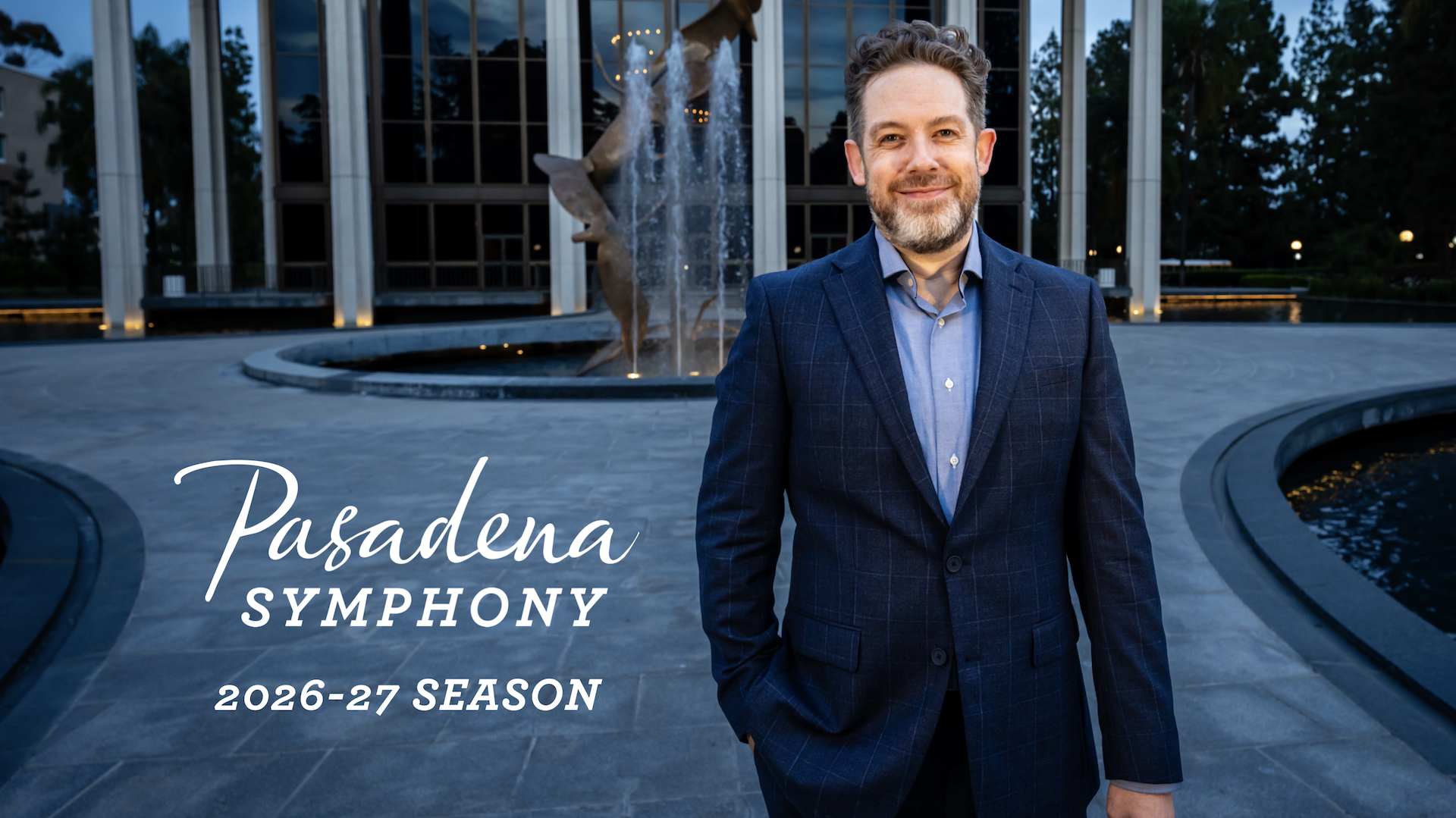
Brett Mitchell will lead his third season as Music Director of the Pasadena Symphony at the Ambassador Auditorium from October 2026 through May 2027. (Photo by Tim Sullens)
PASADENA — The Pasadena Symphony has announced its 2026–27 season, Brett Mitchell’s third as Music Director. Pasadena Now and Patch have both published extensive articles about this announcement.
PASADENA SYMPHONY ANNOUNCES 2026–27 CLASSICS SEASON AT AMBASSADOR AUDITORIUM, OPENING OCT. 24 WITH BRAHMS
Music Director Brett Mitchell's third season closes May 1 with Shostakovich's Fifth, which the orchestra says it has not played in more than a decade
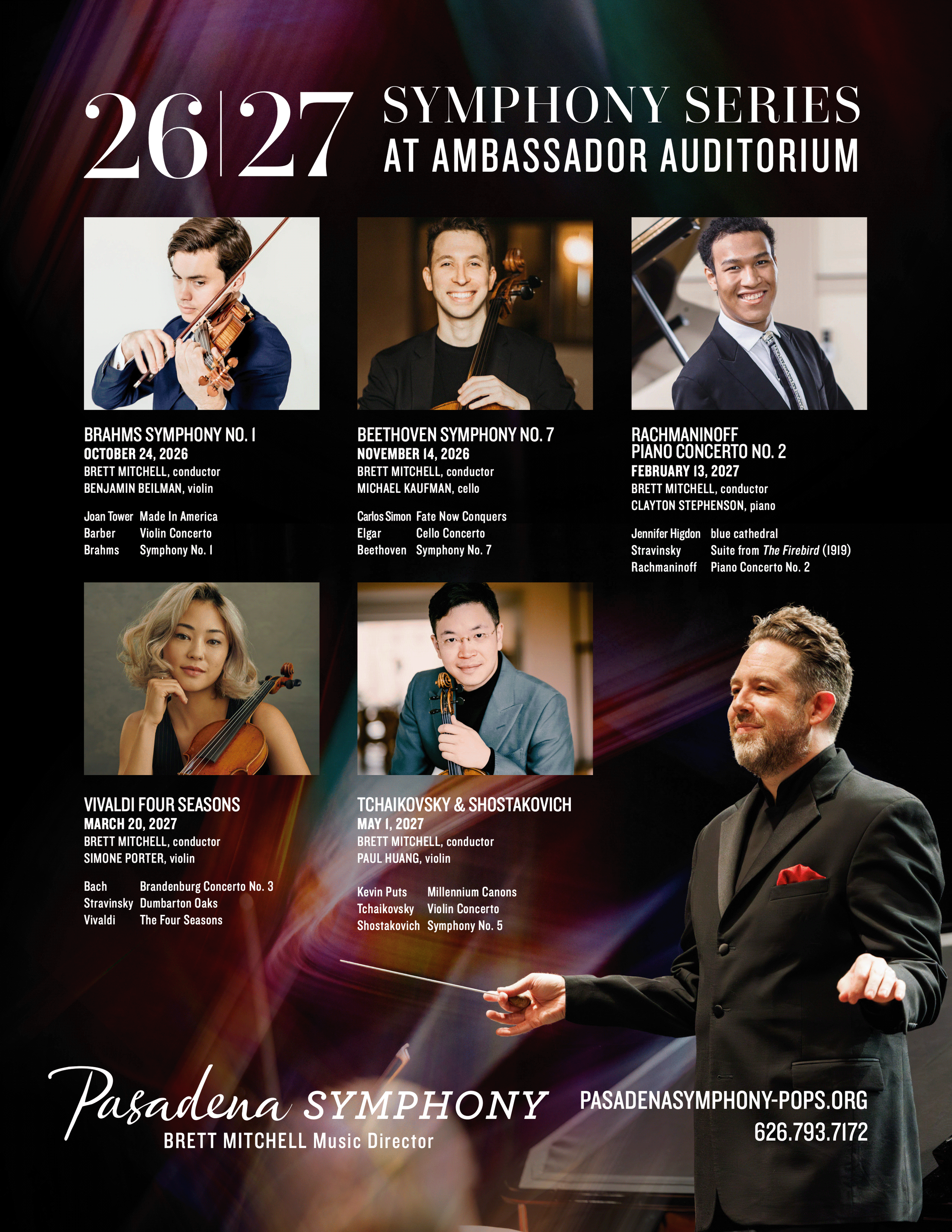
The Pasadena Symphony will open its 2026–27 Classics season on Saturday, Oct. 24, at Ambassador Auditorium with Brahms’ Symphony No. 1, the first of five programs led by Music Director Brett Mitchell, the orchestra announced Wednesday, Sept. 2.
Each program is performed twice, at 2 p.m. and 8 p.m., at the auditorium at 131 S. St. John Ave., the orchestra’s home for more than a decade. Subscriptions start at $129, up from $120 last season, according to the orchestra’s season announcements.
“I’m so pleased during my third season as Music Director of the Pasadena Symphony to continue this great musical journey we’ve been sharing,” Mitchell said in the announcement. “From timeless works by Bach, Beethoven, Brahms, Rachmaninoff, and Tchaikovsky to more contemporary masterpieces by Joan Tower, Carlos Simon, Jennifer Higdon, and Kevin Puts, our 2026/27 season has something for every lover of orchestral music, and the orchestra and I can’t wait to share it with you.”
The opening concert pairs Joan Tower’s “Made in America,” a fantasy on “America the Beautiful” that the orchestra is programming as part of its America 250 commemoration, with Barber’s Violin Concerto, performed by Avery Fisher Career Grant winner Benjamin Beilman, before the Brahms.
On Nov. 14, Principal Cellist Michael Kaufman is the soloist in Elgar’s Cello Concerto on a program with Carlos Simon’s “Fate Now Conquers” and Beethoven’s Symphony No. 7.
Pianist Clayton Stephenson, the 2025 Sphinx Medal of Excellence winner, performs Rachmaninoff’s Piano Concerto No. 2 on Feb. 13, 2027, alongside Jennifer Higdon’s “blue cathedral” and the 1919 suite from Stravinsky’s “The Firebird.”
Violinist Simone Porter returns March 20, 2027, for Vivaldi’s “The Four Seasons,” with Bach’s Brandenburg Concerto No. 3 and Stravinsky’s “Dumbarton Oaks.”
The season closes May 1, 2027, with violinist Paul Huang making his Pasadena debut in Tchaikovsky’s Violin Concerto, Kevin Puts’ “Millennium Canons,” and Shostakovich’s Symphony No. 5, which the orchestra said it has not performed in more than a decade.
A pre-concert conversation hosted by Brian Lauritzen of KUSC Classical California, with Mitchell and guest soloists and composers, begins one hour before each performance, the orchestra said.
Mitchell began a five-year tenure as music director on April 1, 2024, becoming the sixth music director in the orchestra’s history and the first since David Lockington’s departure in 2021. He led the Colorado Symphony from 2017 to 2021 after four years on the conducting staff of the Cleveland Orchestra and an earlier post as assistant conductor of the Houston Symphony, and he continues as artistic director and conductor of Oregon’s Sunriver Music Festival, a position he has held since 2022. In May 2025 he made his New York Philharmonic subscription debut on less than 24 hours’ notice, leading performances with soprano Renée Fleming, according to his biography.
Preview: ‘Sunriver Music Festival brings classical music to Central Oregon’
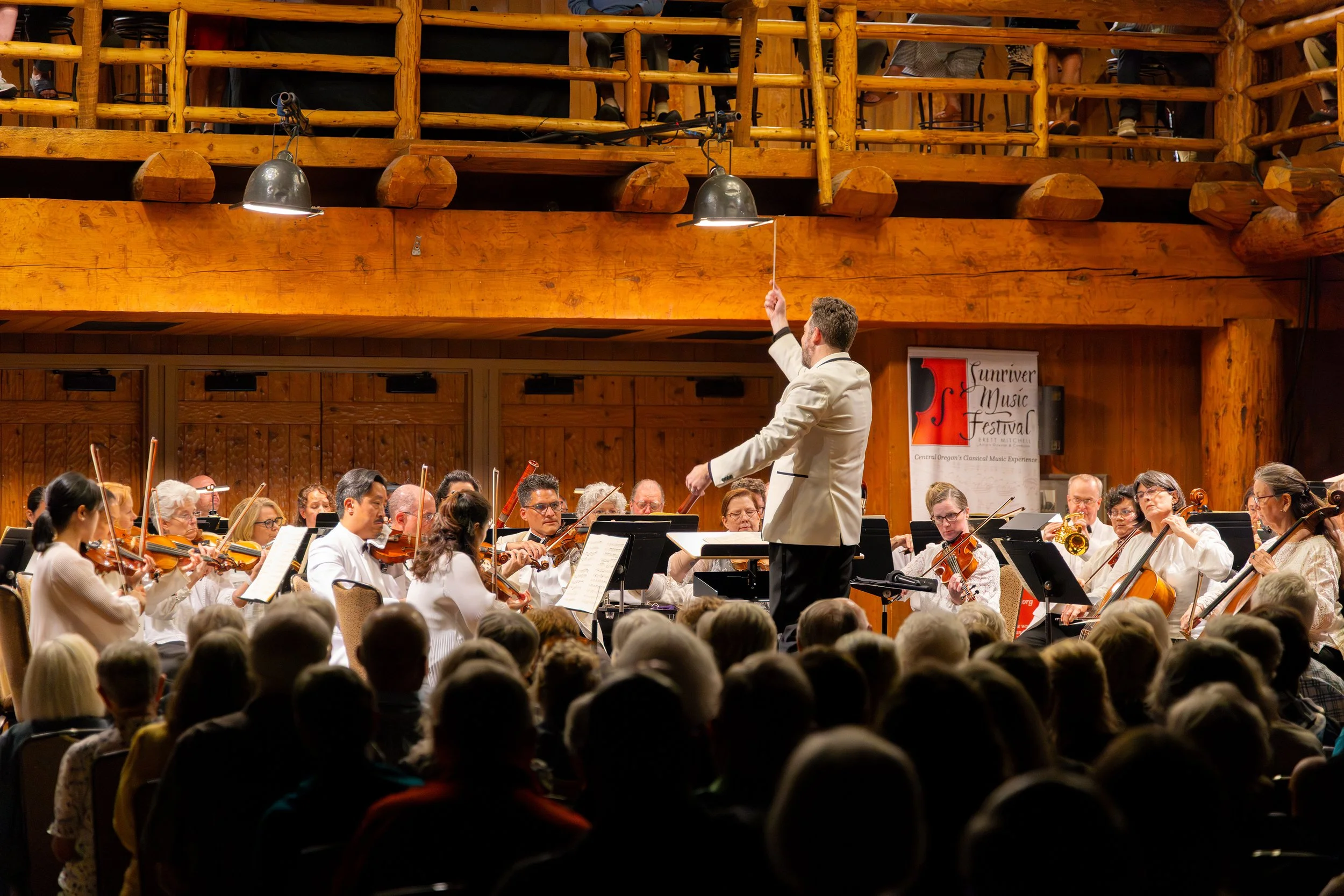
Brett Mitchell leads the Sunriver Music Festival Orchestra at the Sunriver Resort Great Hall. (Photo by David Young-Wolff)
BEND, Ore. — The Bulletin has published a preview of the Sunriver Music Festival’s 2026 season, the fifth under Artistic Director & Conductor Brett Mitchell:
In their earliest conversations about programming a series around America’s 250th birthday, conductor Brett Mitchell and the rest of the Sunriver Music Festival team faced a problem: Should they do it in August 2025, 11 months ahead of July 2026, or this August, a month after what could be the peak of patriotic feelings?
The SRMF team opted for the latter, which means the 49th season of the annual classical musical festival, set to begin Monday, will feature American composers, as well, of course, as a bevy of legends including Beethoven and Bach, Mozart and Mendelssohn, through Aug. 20.
“What I really wanted to do with, and what I’m always trying to do, is to have these programs be a real conversation between the greatest masterworks of yesterday and the most promising voices of today and tomorrow. And in this particular case, because it’s America’s 250th birthday, I really wanted to make sure that we were having a representation of the totality of America,” Mitchell said.
That die will be cast from the first piece he leads the professional Sunriver Festival Orchestra through: “Made in America,” by Grammy-winning composer Joan Tower, during Classical Concert I at 7:30 p.m. Monday in the Sunriver Resort Great Hall. From there, each of the concerts in the annual classical music festival will open with a work by an American composer.
“We will open our 2nd concert with a piece by a gentleman who was known as the dean of African-American composers,” Mitchell said, referring to William Grant Still and his “Darker America,” at 7:30 p.m. Wednesday, Aug. 12.
“We are really trying to hear from a multiplicity of voices because, look, programs, symphonic programs, are little tiny Americas. They’re little tiny melting pots, right?” said Mitchell. “And it’s like, these are the three ingredients that go into this little melting pot for this concert. So the melting pot of the first concert is Joan Tower’s ‘Made in America,’ Beethoven’s 4th Piano Concerto, and Haydn’s 101st Piano Concerto. The melting pot of the next one is a little bit different. But the idea that all of these programs, hopefully, when taken together, will demonstrate to our audience this idea that one, classical music is not a thing that happened. It is a thing that is happening.”
Family Concert
It is happening in Sunriver and Bend, where the series moves for its final concerts — but not until after the annual Family Concert returns Friday, Aug. 14, a matinee event at SHARC with a pre-concert opportunity to “meet the instruments” followed by what is quite possibly the best concert title ever, “Harry Potter & the Instruments of the Orchestra,” featuring music by John Williams.
“It’s such an unusual, interesting thing that he chose to do,” Mitchell said of Williams’ note at the beginning of his score, which reads in part: “When I wrote the full orchestral score for Harry Potter and the Sorcerer’s Stone, I hadn’t planned to write the eight miniatures presented here. The film score did not require them, and our production schedule, usually very difficult in the film world, made no provision for their arrival. However, if I can be permitted to put it a bit colorfully, each piece seemed to insist on being hatched out of the larger body of the full score.”
“So what John does is he takes eight little miniatures, eight different themes, and gives them to the whole orchestra, but to specific sections,” Mitchell said. “So like the second movement is the ‘Theme for Hogwarts,’ right? … And the theme is played by four French horns so that the kids in the audience can hear the sound of French horns. … What about the bad guy? What about Voldemort? He’s played by a trio of bassoons.”
And what about Harry’s magical broomstick, the Nimbus 2000? Played by the woodwinds, of course.
“It’s a great way to play music that the kids will know from a story they will know (and) to show them the colors of the orchestra while we’re doing it,” Mitchell continued. “So they’re getting all of this information without even knowing that they’re getting it. So I’m really, really tickled that we’re going to be able to do this piece for the kids because I know they’re absolutely going to just fall in love with it.”
Pops Concert
The following evening, it’s on to Bend for the remaining concerts, starting with the ever-popular Pops Concert, Saturday, Aug. 15, at the Tower Theatre. Titled, “John Williams and the American Journey,” highlights include music from “Saving Private Ryan,” “Born on the Fourth of July,” some patriotic tunes and Copland’s “Fanfare for the Common Man.”
Mitchell said, “We start with John’s arrangement of ‘The Star-Spangled Banner.’ And then we really begin the program with The Revolutionary War. So some of John’s music for ‘The Patriot,’ and then this wonderful piece for a violin and orchestra called ‘Souvenir from America, Yankee Doodle Variations’ by a French composer. And so that’s The Revolutionary War. Then we go to the Civil War. We’ll do some of John Williams’s music from ‘Lincoln.'”
Said Meagan Iverson, SRMF’s executive director, “Brett is such an aficionado of film music and John Williams, and the way he has been able to create this program that blends a lot of film music, and also beloved patriotic pieces, is going to make for such an incredible concert.”
Iverson also warned that tickets to the Pops Concert, along with Monday’s opening night concert in Sunriver, are selling fast.
“All of the concerts are selling pretty well,” she said. “Those are the two that if people don’t hop on it, we might have to say, ‘Oh, we’ll put you on the wait list.”
The final two classical music concerts are Aug. 18 and 20, also at the Tower Theatre.
While you’ll need a ticket to attend all of the abovementioned concerts, Iverson notes that there are a number of rehearsals that are free and open to the public. The open rehearsal schedule, as well as ticketing, more events and other information, is at sunrivermusic.org.
Some concerts have only one rehearsal, which would not happen if the Festival Orchestra was not made up of professionals who come ready to play, Iverson added.
“We have been realizing that (open rehearsal) is a very extra special offering, as it’s becoming less and less common to have so many opportunities for people, to just get a taste of what’s happening behind the scenes,” Iverson said, “and hopefully be inspired then to come to the full concert.”
To read the complete preview, please click here.
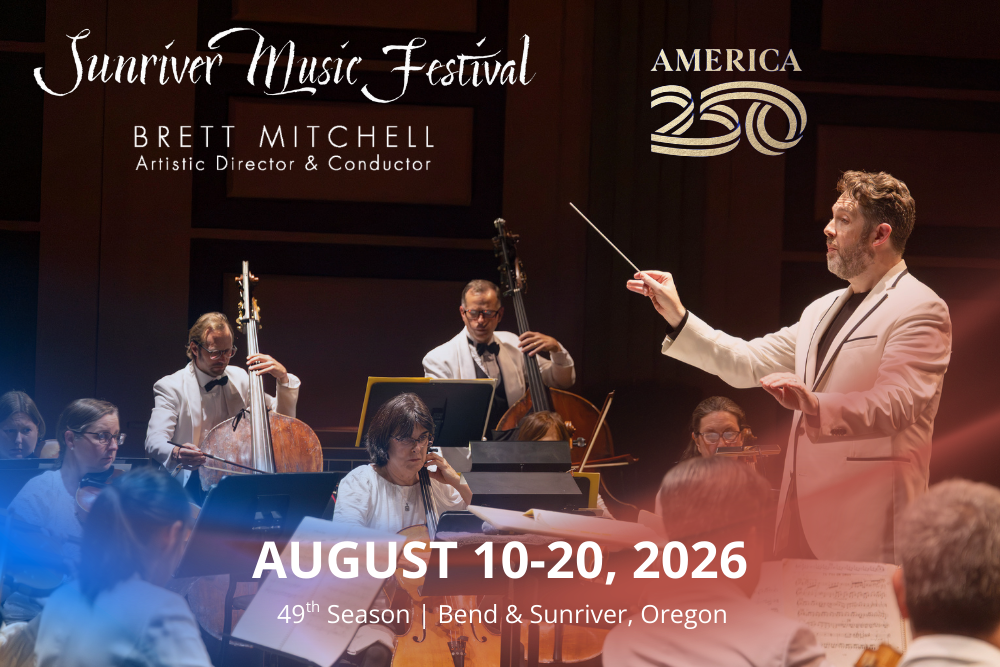
Videos: Brett Mitchell Previews the 2026 Sunriver Music Festival
SUNRIVER — Brett Mitchell has released six short videos previewing each concert of the 2026 Sunriver Music Festival, which runs from Monday, August 10 through Thursday, August 20 in Sunriver and Bend, Oregon.
Mon, Aug 10: Opening Night
Tower | Beethoven | Haydn
Wed, Aug 12: America Meets Scotland
Still | Barber | Mendelssohn
Fri, Aug 14: Harry Potter & the Instruments of the Orchestra
Williams | Mendelssohn
Sat, Aug 15: John Williams & the American Journey
Williams | Vieuxtemps | Gould | Copland
Tue, Aug 18: The Genius of Music
Puts | Bach | Mozart
Thu, Aug 20: Season Finale
Copland | Meyer | Schumann
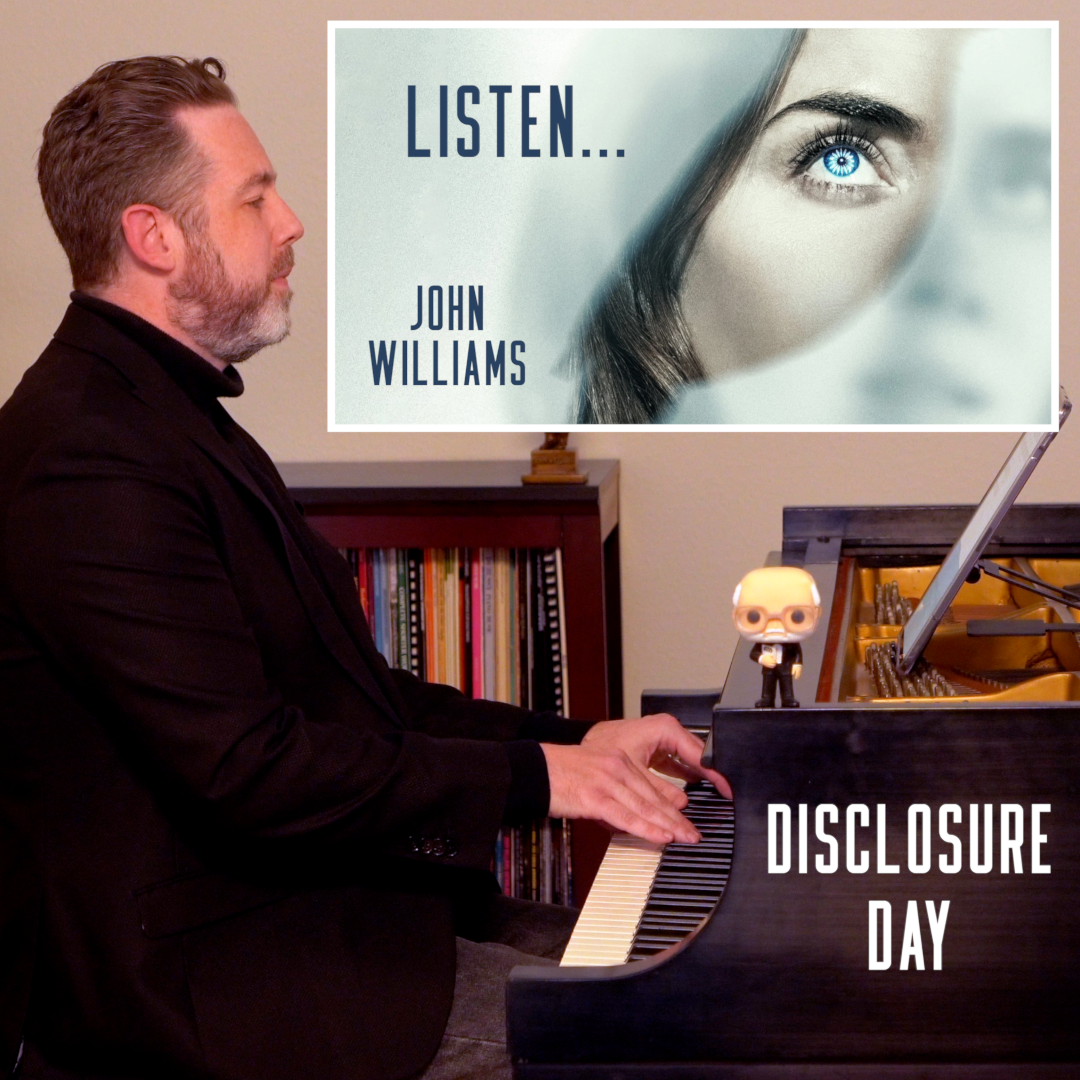
Brett Mitchell Releases New Solo Piano Arrangement from John Williams’s ‘Disclosure Day’
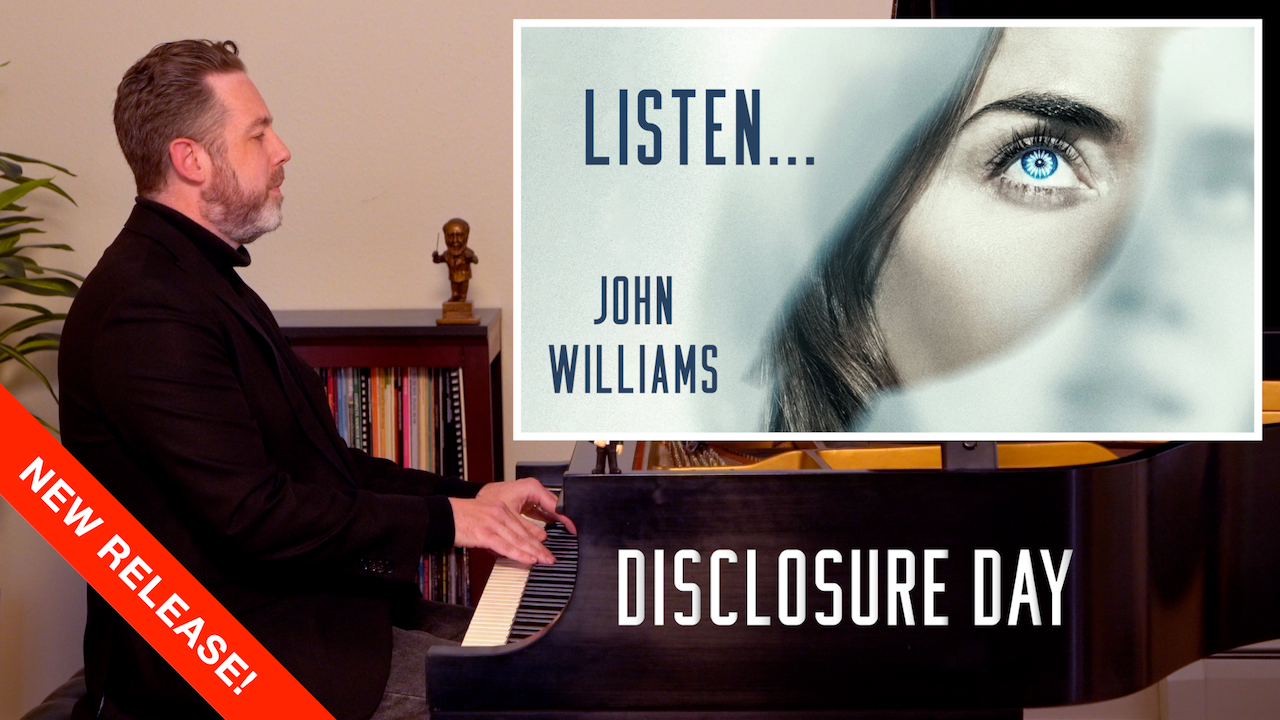
Brett Mitchell has released a solo piano arrangement of ‘listen…’ from John Williams’s score for the new science fiction film Disclosure Day, his 30th feature collaboration with director Steven Spielberg.
Published on the same day as the release of both the film and its soundtrack album, the performance is an original transcription of the first cue unveiled from Williams’s highly anticipated score. The arrangement continues Mitchell’s longstanding exploration of Williams’s music through more than 150 original solo piano transcriptions, which have attracted a dedicated international audience of film music enthusiasts.
The complete performance may be viewed here.
Brett Mitchell to Present Solo Piano Recital: ‘The Art of Film Music’
Brett Mitchell will present a solo piano recital, ‘The Art of Film Music,’ in May 2027 in Denver on the Second Tuesdays concert series.
DENVER — Second Tuesdays has announced that Brett Mitchell will perform a solo piano recital to close their 2026-27 season.
On Tuesday, May 11, 2027, Mitchell will present ‘The Art of Film Music,’ a collection of his original arrangements of iconic cues from film score history.
From the organization:
Recently named a Steinway Artist and highly regarded as a conductor, the versatile Brett Mitchell presents an engaging program, ‘The Art of Film Music.’ You won’t want to miss this end of season musical celebration!
Mitchell first performed on the Second Tuesday series in May 2025 in a recital with his wife, soprano Angela Mitchell, entitled ‘Spring Awakenings.’ This will be his second appearance on the series.
To learn more, please click here.
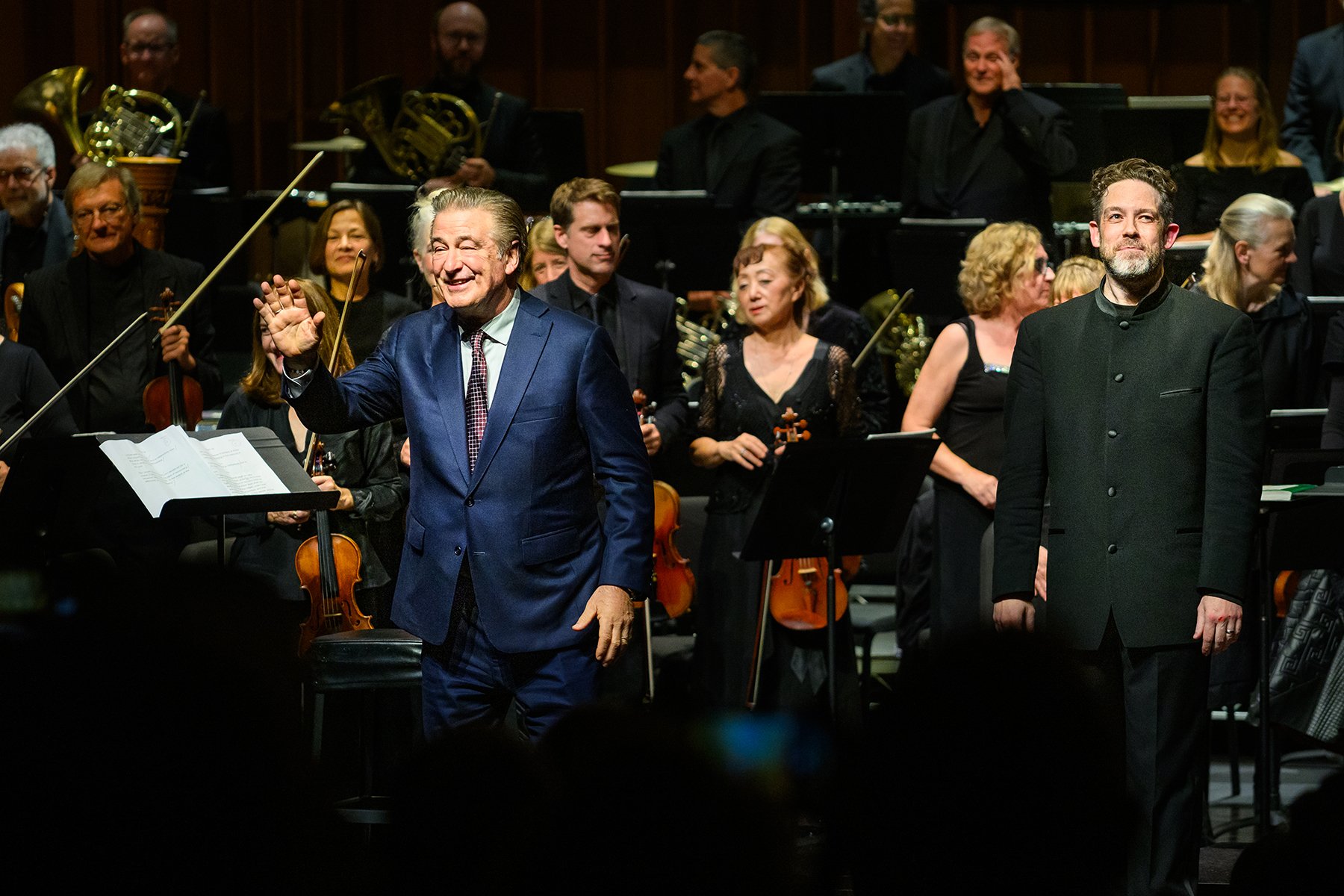
Review: ‘Alec Baldwin Brings Lincoln’s Legacy to Pasadena Symphony’s Season Finale’
Narrator Alec Baldwin, Music Director Brett Mitchell, and the Pasadena Symphony at the Ambassador Auditorium. (Photo by Jamie Pham)
PASADENA — Local News Pasadena has published a review of the Pasadena Symphony’s 2025-26 season finale, Brett Mitchell’s second as Music Director:
The Pasadena Symphony closed its season at Ambassador Auditorium with a program titled America at 250, celebrating the nation’s upcoming 250th anniversary. The evening combined American compositions with reflections on democracy, immigration, and national identity, culminating in a moving performance of Aaron Copland’s Lincoln Portrait narrated by actor Alec Baldwin.
As is tradition, the symphony hosted its pre-concert “Insights” discussion an hour before the performance. Conductor Brett Mitchell, KUSC radio host Brian Lauritzen, and pianist Terrence Wilson provided historical background and musical context that enriched the audience’s experience throughout the evening.
The concert opened with John Williams’ Liberty Fanfare, composed in 1986 to commemorate the centennial of the Statue of Liberty. Mitchell noted that Williams had previously written the highly successful Olympic Fanfare and Theme for the 1984 Los Angeles Olympics, making him a natural choice for another national celebration.
“The dude knows how to write a fanfare,” Mitchell quipped. “It’s a humdinger.”
The piece immediately set a celebratory tone, filling the hall with the bold, unmistakably American sound that has made Williams one of the nation’s most recognizable composers.
Gershwin’s American Sound
A substantial portion of the pre-concert discussion focused on George Gershwin’s Concerto in F for Piano and Orchestra, the evening’s longest work and a centerpiece of the program. The concerto, composed in 1925, was performed by Grammy-winning, Juilliard-trained pianist Terrence Wilson alongside the Pasadena Symphony.
Lauritzen, Mitchell, and Wilson enthusiastically explored Gershwin’s innovative use of harmony. They described tonic chords as musical “home” and dominant chords as creating a sense of movement or being “away.” Gershwin’s playful manipulation of those relationships became one of the hallmarks of his style, shaped in part by the rich cultural influences surrounding him as the son of Russian-Jewish immigrants.
Mitchell demonstrated these harmonic tensions at the piano, bringing the discussion to life for audience members.
Because conductor Walter Damrosch of the New York Symphony Orchestra was so captivated by Gershwin’s Rhapsody in Blue, he commissioned the composer to create a larger, more ambitious work. The result was the three-movement Concerto in F.
The first movement, Allegro, opens with energetic orchestral rhythms before yielding to a blues-infused piano solo. Mitchell shared his own struggles as a young musician learning to authentically “swing,” underscoring the unique challenge of blending classical precision with jazz sensibility. Wilson, however, made the style sound effortless.
The second movement, Adagio, offered a more reflective atmosphere, highlighted by expressive solos from the woodwinds and brass, including a memorable muted trumpet passage.
The finale, Allegro agitato, was described by Gershwin himself as an “orgy of rhythms.” Wilson and the orchestra delivered a dazzling performance that brought the audience to its feet.
Gershwin’s enduring legacy rests largely on his pioneering fusion of classical music and jazz. As Mitchell observed, “Gershwin wanted to put jazz into classical music and classical music into jazz.” The uniquely American sound he created helped define the Roaring Twenties and continues to resonate today.
Aaron Copland and the American Landscape
The second half of the program featured two works by Aaron Copland, another son of Jewish immigrants whose music became synonymous with the American experience.
Mitchell explained that Copland initially gained recognition for more dissonant, rhythmically complex compositions influenced by modernism and jazz. In later works, however, he embraced a more open and accessible style that listeners came to associate with the American landscape.
One of the finest examples is Appalachian Spring, written for choreographer Martha Graham. Although Copland originally called the work Ballet for Martha, Graham later suggested the title that audiences know today, inspired by a line from a poem by Hart Crane.
When the piece premiered in 1945, audiences remarked that they could almost see the hills and smell the air of Appalachia. Through spacious harmonies and folk-inspired melodies, Copland created a musical portrait of optimism, community, and possibility.
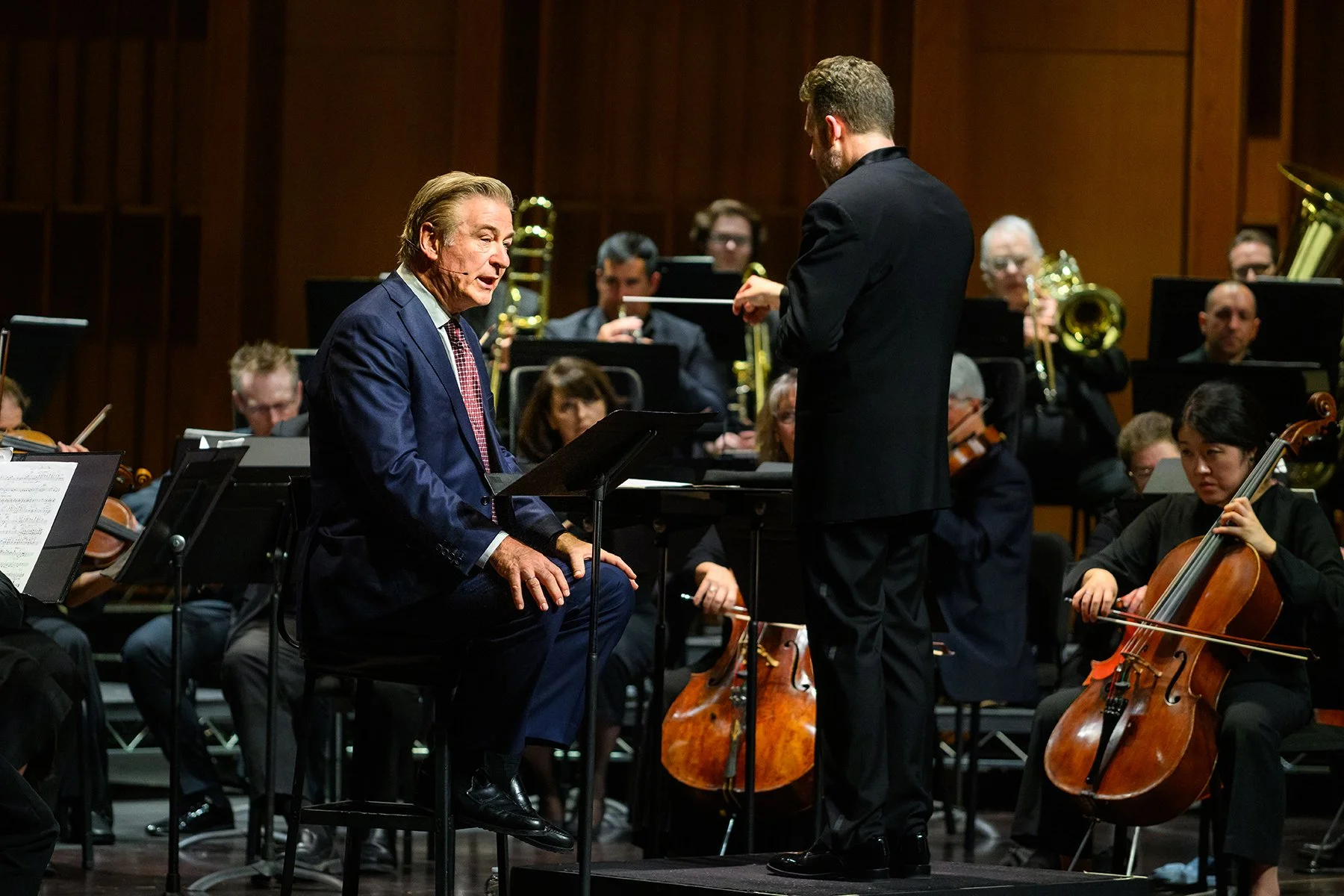
Alec Baldwin narrates Copland’s Lincoln Portrait with the Pasadena Symphony and Music Director Brett Mitchell. (Photo by Jamie Pham)
Lincoln’s Words for Then—and Now
The evening concluded with Copland’s Lincoln Portrait, commissioned in 1942 as America entered World War II. Conductor André Kostelanetz envisioned the work as a patriotic statement that would remind audiences of the nation’s democratic ideals during a time of global crisis.
For this performance, Mitchell invited actor Alec Baldwin to serve as narrator.
After a musical introduction incorporating the folk tunes “Camptown Races” and “Springfield Mountain,” Baldwin delivered Lincoln’s words.
“Fellow citizens, we cannot escape history,” he began in his characteristically booming, resonant baritone. “We of this Congress and this administration will be remembered despite ourselves.”
The audience sat transfixed as Baldwin delivered passages drawn from Lincoln’s speeches and writings, including excerpts addressing slavery, democracy, equality, and civic responsibility. Written during the darkest years of the Civil War, Lincoln’s words felt strikingly relevant today.
Perhaps most powerful was hearing these reflections from December 1862, when the war’s outcome remained uncertain, and the nation appeared irreparably divided. Lincoln offered neither easy optimism nor false reassurance. Instead, he called on Americans to meet their responsibilities with courage and conviction.
More than 160 years later, his message still resonates.
Throughout the hall, audience members wiped away tears as Baldwin’s narration merged seamlessly with Copland’s soaring score. The work became more than a historical tribute. It felt like a reminder that democracy has endured moments of profound division and that its survival has always depended on ordinary citizens’ willingness to uphold its ideals.
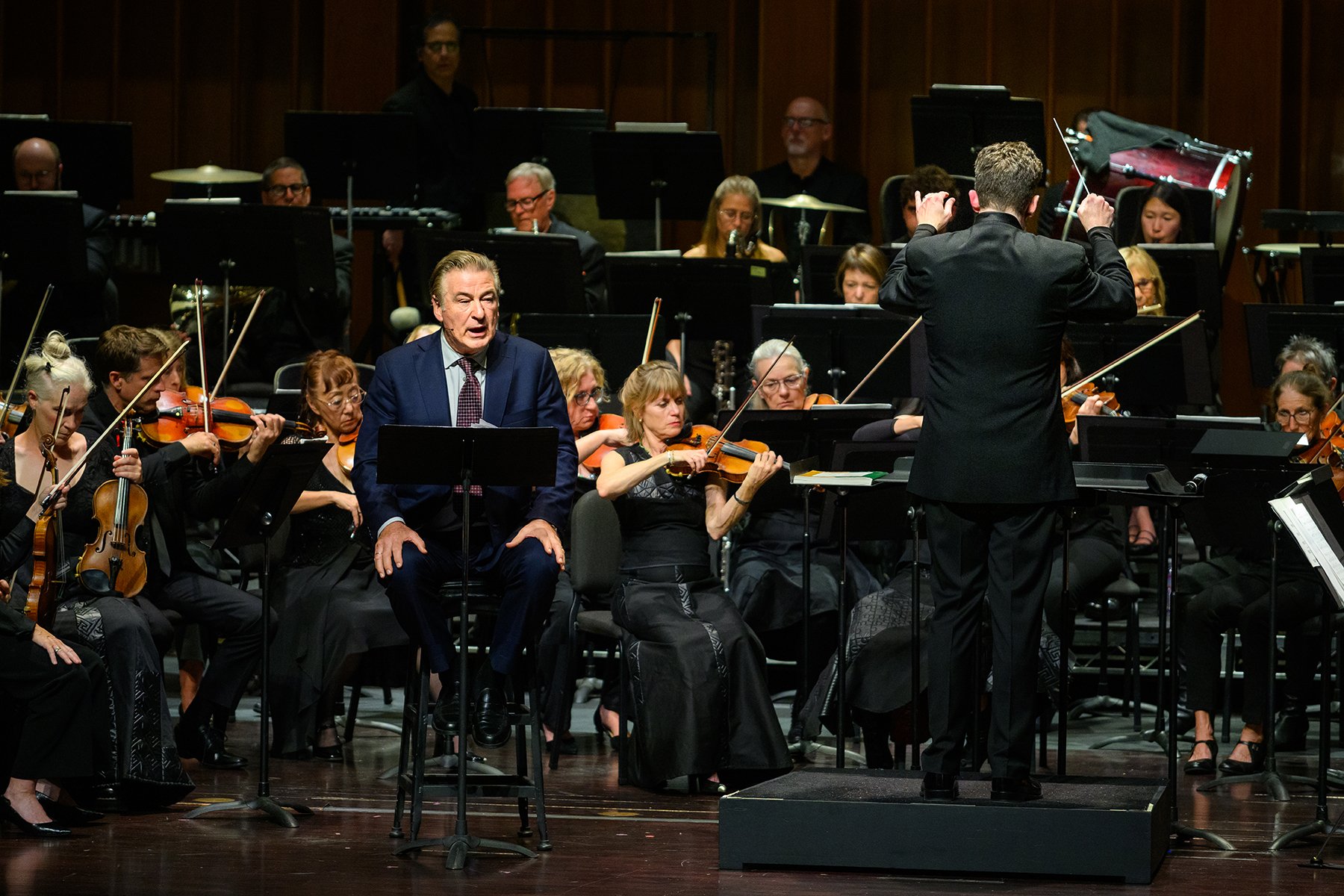
Alec Baldwin narrated the words of President Lincoln as set to music by Aaron Copland on the Pasadena Symphony’s 2025-26 season finale under Music Director Brett Mitchell. (Photo by Jamie Pham)
A Message of Hope
The evening showcased the work of some of America’s greatest artists: Lincoln, whose words continue to inspire; Copland and Gershwin, who helped define an American musical identity; and the performers who brought their visions to life.
Under Brett Mitchell’s leadership, with outstanding performances by Terrence Wilson, Alec Baldwin, and the Pasadena Symphony, America at 250 became a meditation on the nation’s history, its struggles, and its possibilities.
At a time when many Americans question the strength of the institutions that bind us together, hearing Lincoln’s voice once again, through Baldwin’s compelling narration and Copland’s majestic score, offered something increasingly rare: reassurance that the nation has faced great tests before and emerged stronger because citizens chose hope over despair.
For one evening in Pasadena, that message felt both timely and deeply moving.
To read the complete review, please click here.
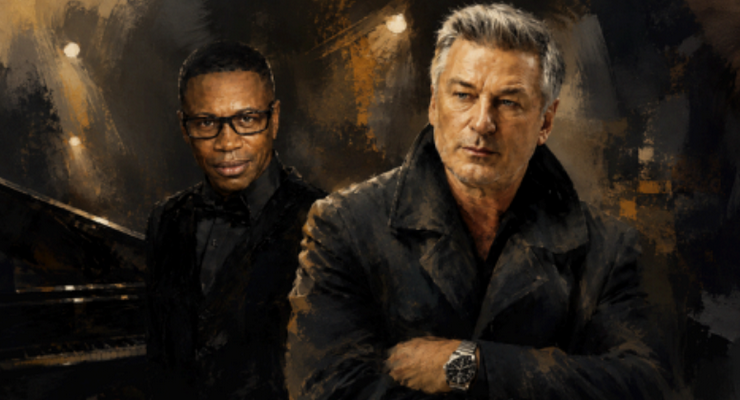
Preview: ‘Pasadena Symphony to Close Its Season Saturday with an American Survey’
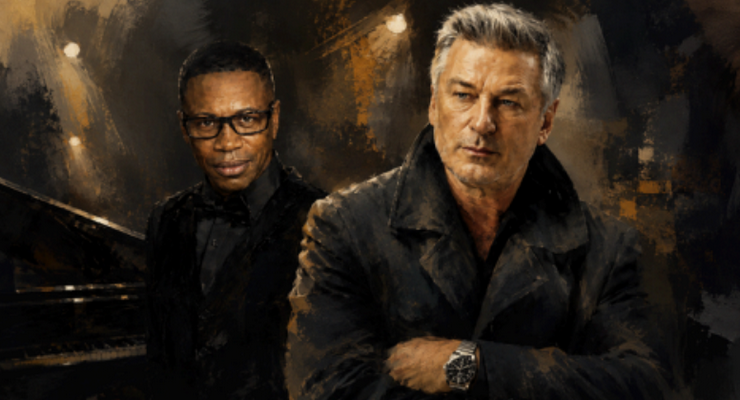
Alec Baldwin narrates Copland and Terrence Wilson takes up Gershwin, in a finale shaped to the nation's 250th
PASADENA — Pasadena Now has published a preview of the Pasadena Symphony’s 2025-26 season finale, the second under Music Director Brett Mitchell:
For its season finale, the Pasadena Symphony has set aside the European masterworks that usually close a year and turned toward home. “America@250,” the program it brings to Ambassador Auditorium on Saturday, surveys roughly a century of American orchestral writing, timed to the country’s 250th birthday — and it caps a season that the orchestra’s music director, Brett Mitchell, built around American composition, old and new.
The afternoon’s gravitational center is Aaron Copland’s “Lincoln Portrait,” which closes the program. Copland wrote it in 1942, on a commission from the conductor André Kostelanetz, who — with the United States freshly in the war — wanted musical portraits of eminent Americans. The piece sets Lincoln’s own words, the Gettysburg Address among them, over an orchestra that climbs from a hush to a blaze, with fragments of period tunes such as “Camptown Races” woven through. It calls for a single speaker, and over the decades that part has drawn an improbable range of voices: Henry Fonda, Katharine Hepburn, Vincent Price, James Earl Jones, and Copland himself.
On Saturday the voice belongs to Alec Baldwin, who has spoken the part before, with the Philadelphia Orchestra. He inherits a role written in 1942 as wartime reassurance, revived here for a very different national milestone.
The concerto is Terrence Wilson’s. The Grammy-nominated pianist — a Bronx native and Juilliard graduate who teaches at Bard College — plays Gershwin’s Concerto in F, and he arrives by way of a late change to the bill: Wilson replaces Joyce Yang, who is recovering from an injury and had been set to give the West Coast premiere of a new Jonathan Leshnoff work. In its place stands Gershwin’s 1925 concerto, written for the conductor Walter Damrosch after the success of “Rhapsody in Blue” to show that jazz could fill the three-movement concert form — and the first large score Gershwin orchestrated entirely on his own.
The program opens with John Williams’s “Liberty Fanfare,” a brass flourish composed in 1986 for the centennial of the Statue of Liberty, and takes in the suite from Copland’s “Appalachian Spring,” the 1944 Martha Graham ballet whose closing variations on the Shaker tune “Simple Gifts” have become a kind of shorthand for the American pastoral. Set end to end, the four works trace one idea of the national sound — fanfare, jazz, frontier, elegy.
Mitchell, in his second season as music director, called Baldwin and Wilson two “extraordinary artists” and said he “couldn’t be more excited to share the stage” with them for the season’s close.
With the finale, Mitchell closes a season given over to American music of the last century.
To read the complete preview, please click here.
Brett Mitchell leads the Nashville Symphony in music of Barber, Beethoven, and Edgar Meyer
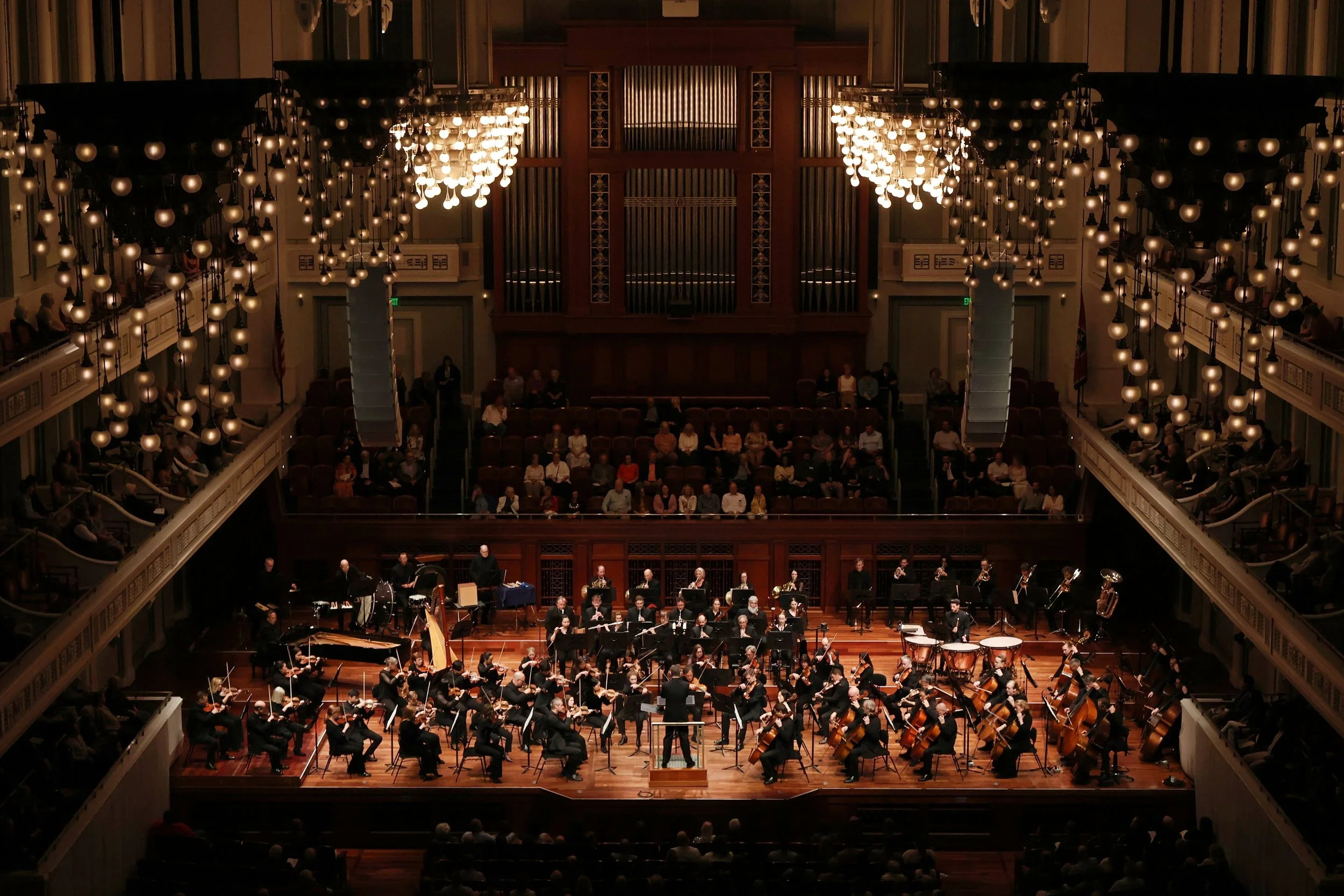
Brett Mitchell leads his debut with the Nashville Symphony at Schermerhorn Symphony Center on Friday, May 15. (Photo by Matthew Oh)
NASHVILLE — Brett Mitchell made his debut with the Nashville Symphony on Friday, May 15 and Saturday, May 16, leading two performances of the following program at Schermerhorn Symphony Center:
BARBER - Medea’s Meditation and Dance of Vengeance
EDGAR MEYER - Bass Concerto No. 2 (for Double Bass and Percussion)
Edgar Meyer, double bass | Sam Bacco, percussion
BEETHOVEN - Symphony No. 3, ‘Eroica’
View images and videos from the week below.
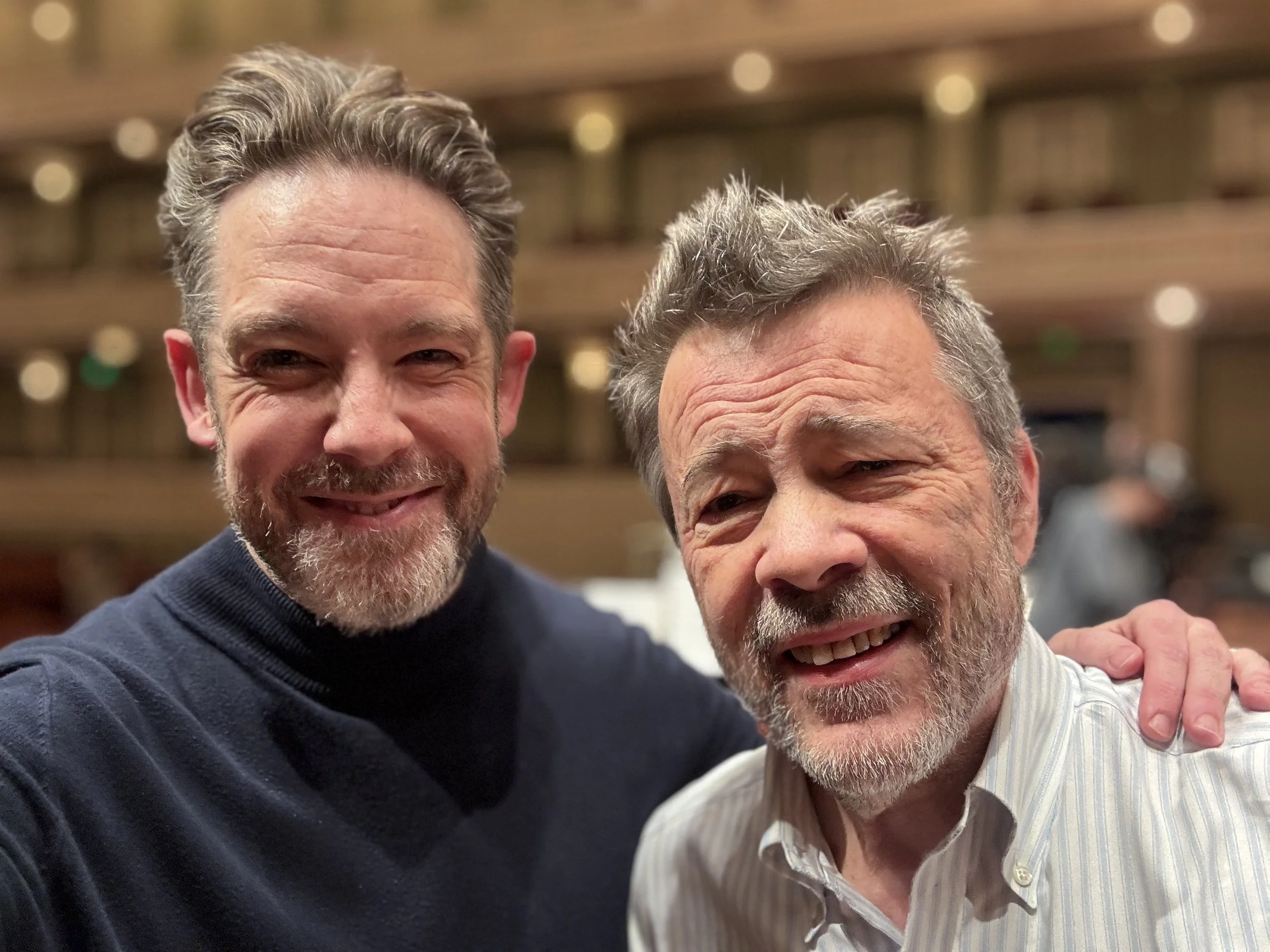
Conductor Brett Mitchell and bassist/composer Edgar Meyer
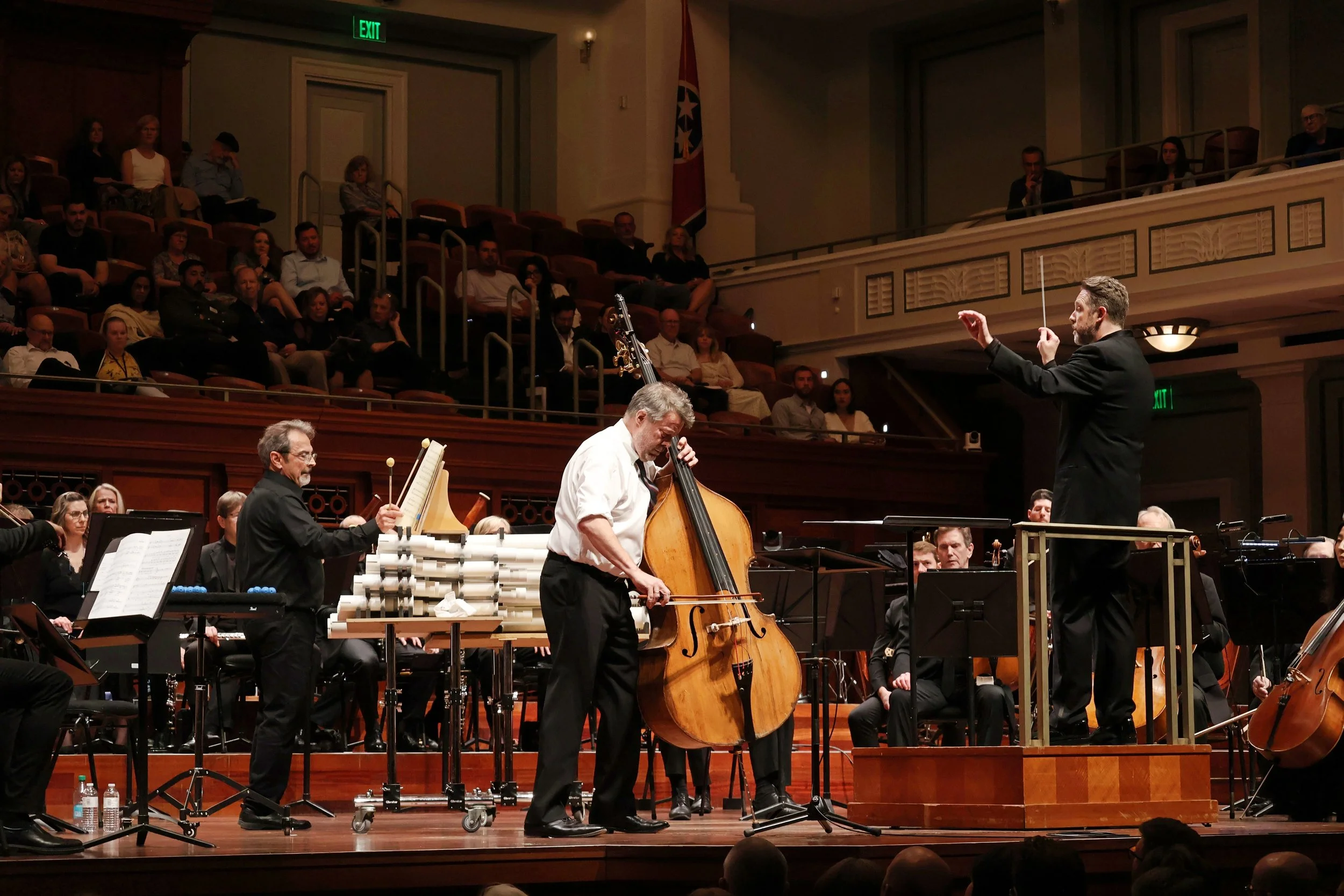
Percussionist Sam Bacco, bassist Edgar Meyer, and conductor Brett Mitchell perform Meyer’s Second Bass Concerto with the Nashville Symphony. (Photo by Matthew Oh)
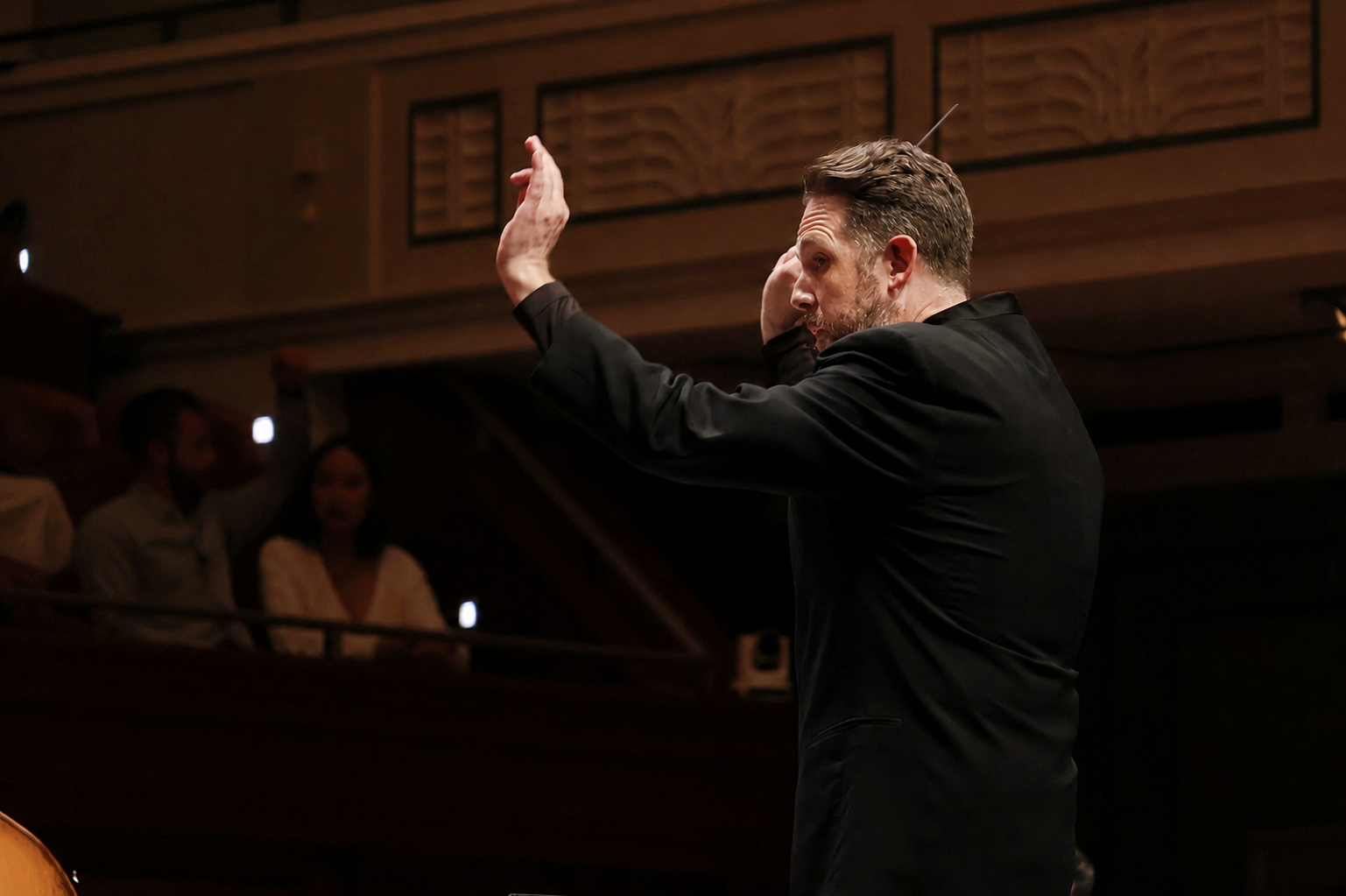
Brett Mitchell leads his debut performance with the Nashville Symphony at Schermerhorn Symphony Center on Friday, May 15. (Photo by Matthew Oh)
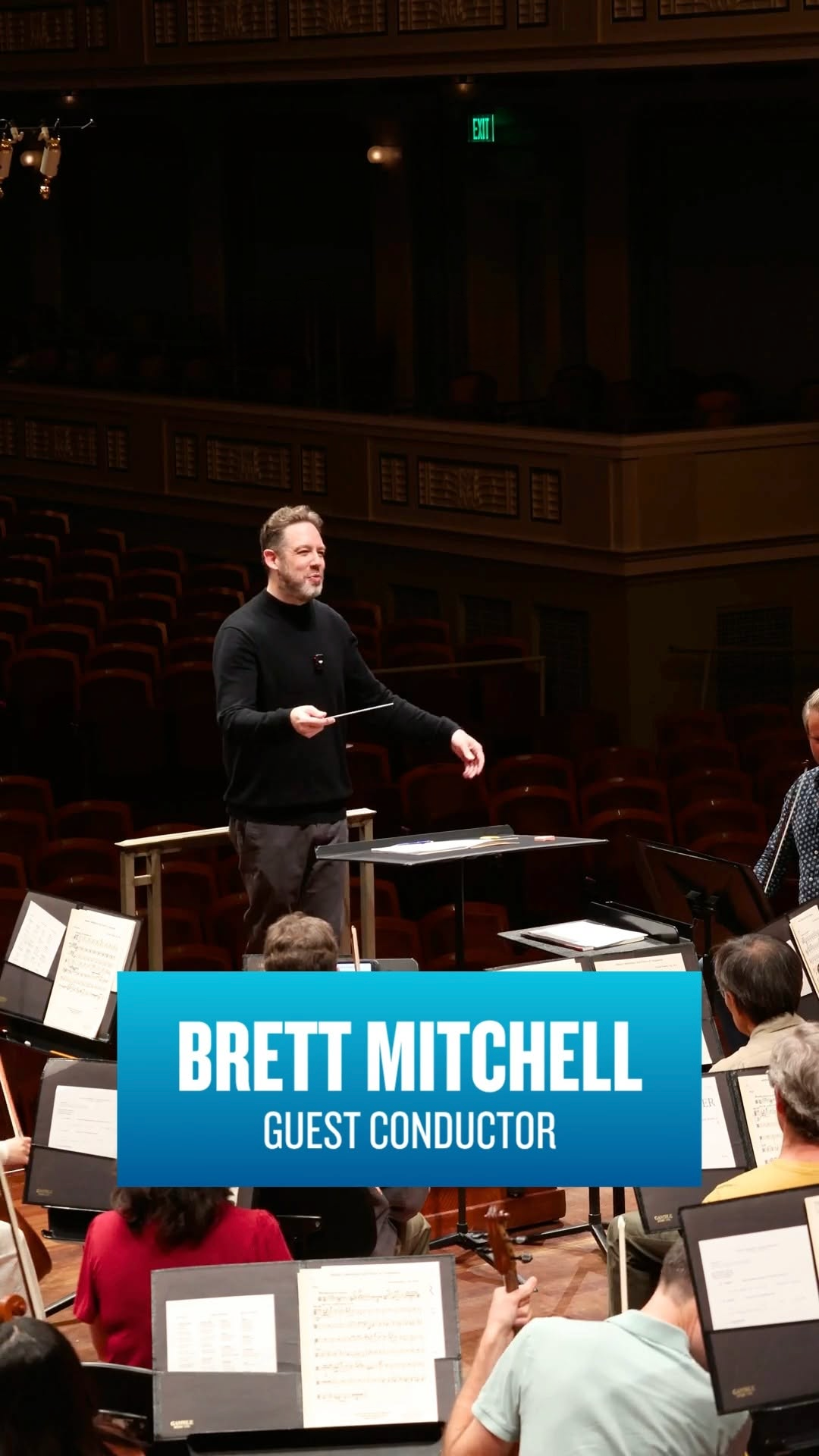
REHEARSAL CAM
CONCERT INVITATION
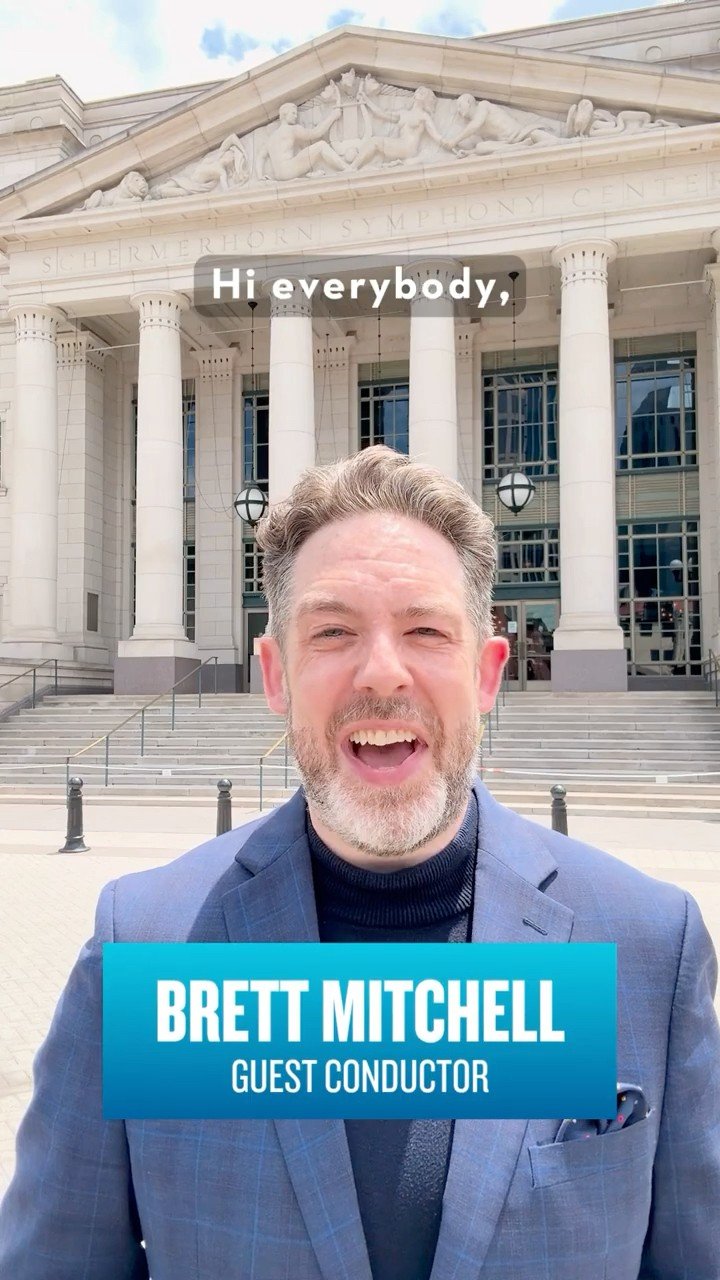
WEEKEND WRAP-UP
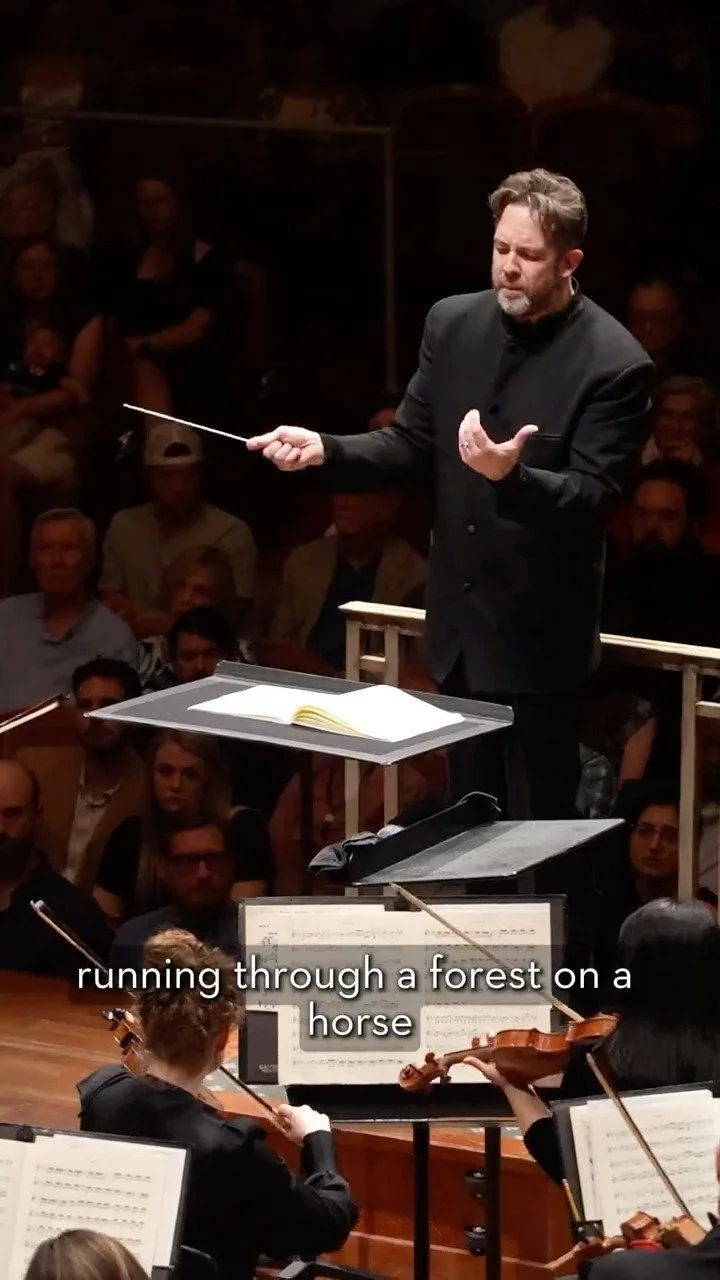
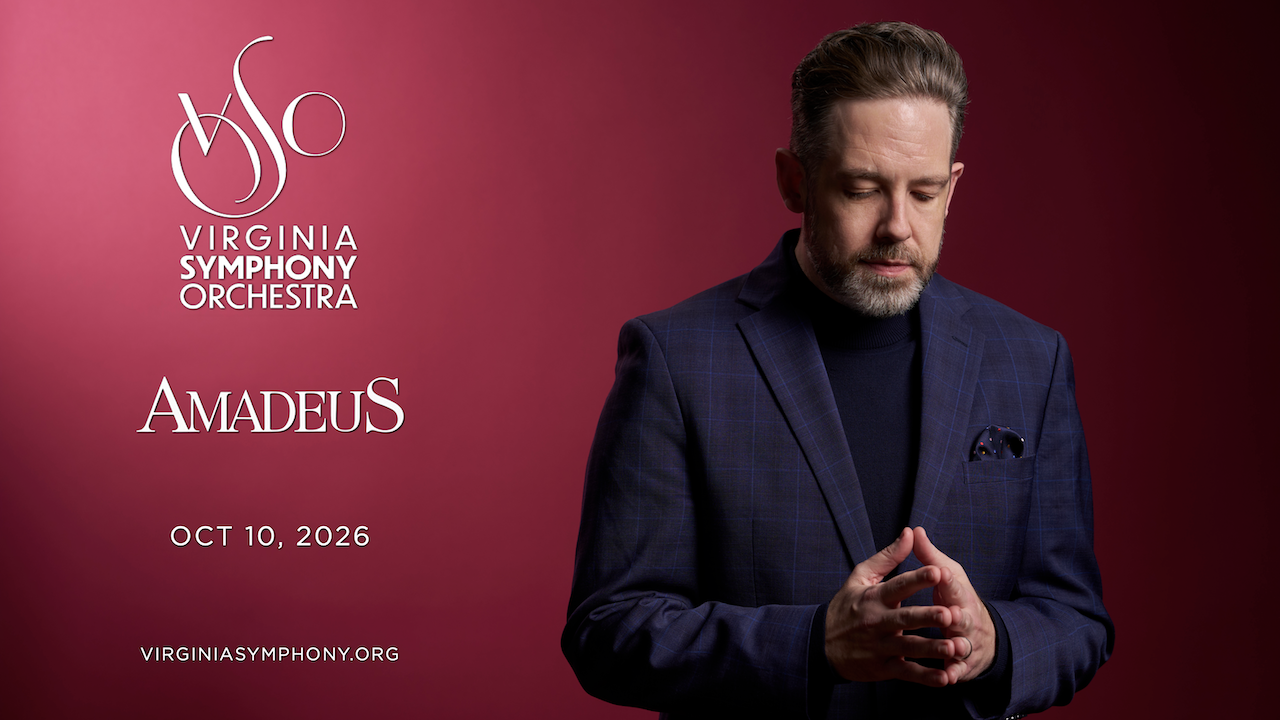
Brett Mitchell to Debut with Virginia Symphony Orchestra in October 2026
NORFOLK, Va. — In unveiling their 2026-27 season, the Virginia Symphony Orchestra has announced that Brett Mitchell will make his debut in October 2026, leading the orchestra and the Virginia Symphony Orchestra Chorus in the music of Mozart to accompany a screening of the eight-time Oscar-winning classic Amadeus.
This performance will be presented on Saturday, October 10 at 7:30 p.m. at the Harrison Opera House in Norfolk, VA.
For more information and to purchase tickets, please click here.
Audio: Brett Mitchell on ‘Ray’s Random Questions’
Getting to know some of Central Oregon’s most interesting and influential people by using ice-breaker questions
BEND, Ore. — Brett Mitchell has appeared on the latest episode of Ray’s Random Questions, an interview series hosted by Ray Solley “using three levels of ice-breaker questions randomly drawn by each guest. By listening and posing follow-up questions, Solley prompts informal conversations, making each participant comfortable to share personal stories, meaningful memories, life values… and which ice cream flavor best sums up their mood today.”
Listen to this 24-minute episode on MyCentralOregon.com or via the player below.
Brett Mitchell to Debut with Lyric Opera of Chicago in January 2027
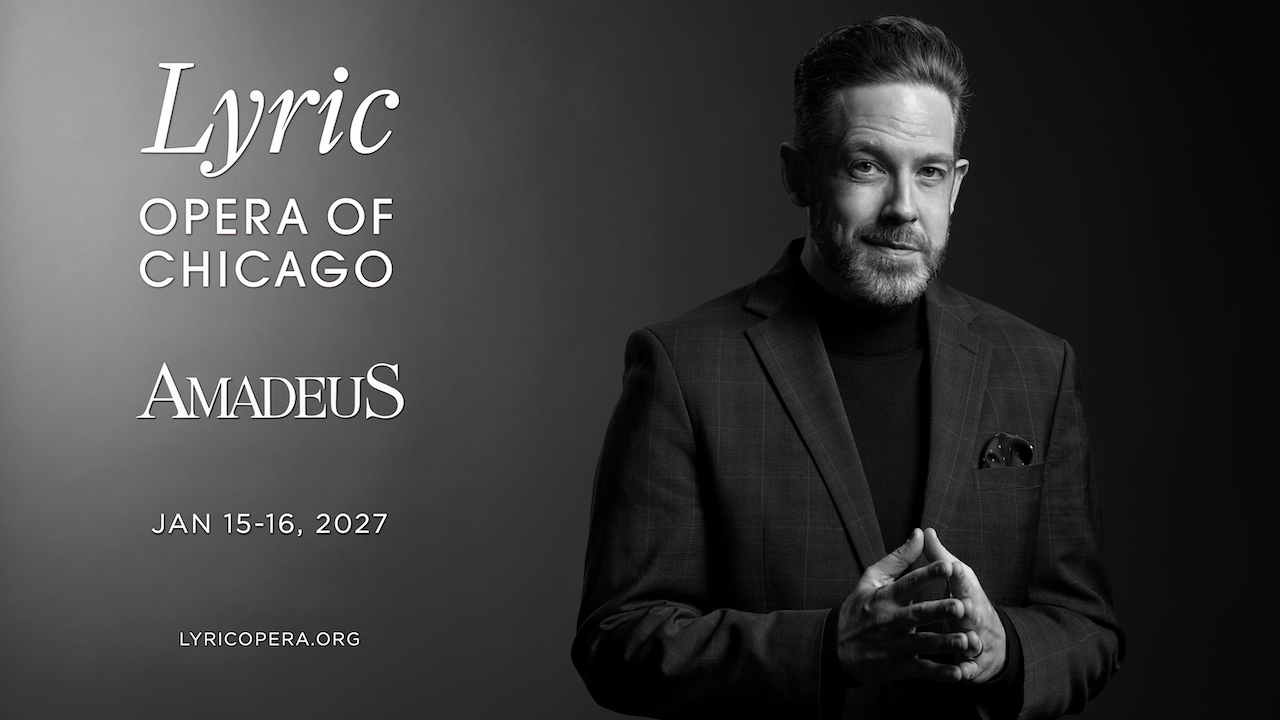
CHICAGO — In unveiling their 2026-27 season, Lyric Opera of Chicago has announced that Brett Mitchell will make his debut with the company in January 2027, leading the Lyric Opera Orchestra and Chorus in the music of Mozart to accompany two screenings of the eight-time Oscar-winning classic Amadeus.
Mr. Mitchell and the musicians will present two performances of the project, both at the Lyric Opera House in downtown Chicago:
Friday, January 15 at 7 p.m.
Saturday, January 16 at 2 p.m.
For more information and to purchase tickets, please click here.
And click here to read a preview of the Lyric’s 2026-27 season from CBS Chicago.

Preview: Sunriver conductor Brett Mitchell to play in ‘Maestro at the Piano’ Saturday
Brett Mitchell will present a solo piano recital in Sunriver, Ore. on Saturday, April 11, featuring his original arrangements of iconic works from film score history. (Photo by Roger Mastroianni)
BEND, Ore. — The Bulletin (Bend) has published a preview of Brett Mitchell’s upcoming solo piano recital in Sunriver on Saturday, April 11.
Sunriver conductor Brett Mitchell to play in ‘Maestro at the Piano’ Saturday
Mitchell flexes his other chops, arranging tunes from Star Wars, Jurassic Park and other popular films for piano
On Saturday, Central Oregonians will have another chance to see and hear Sunriver Music Festival Artistic Director and Conductor Brett Mitchell — this time around, however, he won’t be on a podium, but rather seated at a piano in his exclusive “The Maestro at the Piano: Music in Film” recital.
For Mitchell, it’s a familiar space in which to ply two major, if lesser known, aspects of his musicality.
“I’ve always been a pianist. I’ve always played the piano,” he said last week by phone from his home in Denver, where he is former conductor of the Colorado Symphony. Today, Mitchell conducts the Pasadena Symphony, as well as Central Oregon’s summertime concert series each August.
But before his career helming orchestras, Mitchell’s piano abilities and ambitions almost took him down a different career path: composition.
“By the time I got into college, I thought I wanted to be a film composer,” Mitchell said. “And the bigger the pieces I started writing, the more likely they were to need a conductor. So I ended up just kind of conducting my own pieces, and then that led to conducting other people’s pieces. But that piano part of things for me has always been really at the forefront for me, even though it hasn’t been at the forefront of how I perform most of the time publicly. I mean, certainly the world knows me as a conductor.”
Musical chairs
Six years ago, courtesy of a pandemic, that work came to an abrupt halt — or a caesura, if you want to put it in classical conducting terms.
“The whole reason that I became a conductor is because I love working with other people. I love working with other musicians,” he said. “And obviously when the pandemic happened, that went away, in large part for a year, year and a half, two years, depending on how you look at it. And I was sitting there here in our house, probably two months into this thing when it became clear that it wasn’t going to be like a two-month deal, but that we were going to all be here for a while.”
This allowed Mitchell to both play the piano and get creative by “flexing (his) arranging chops, arranging chops, taking iconic scores from film music history and arranging them for solo piano,” as he put it in a press release from Sunriver Music Festival.
As is surely true of many a great feat, this one came about after complaining to his spouse.
“I was basically just complaining to my wife saying, ‘I have I have no way to perform right now, because the performing that I do requires other large groups of musicians to all be in the same place together and that’s not able to happen,'” he recalled. “And she said, ‘We’ve got the Steinway. Why don’t you why don’t you go go make music on the Steinway?’ And while that’s a very different experience, what I really found was so fulfilling to me. I had basically left the piano alone in terms of public performance for the better part of 20 years.”
That’s not altogether true; he had performed a recital or two in that time, as well as occasional chamber performances with orchestra members. Otherwise, he’d spent little time playing piano in public for those two decades.
On his home Steinway, “What I was able to do was kind of take all of the parts of me that make me who I am musically, which is primarily an orchestral conductor. I have also conducted an awful lot of films live to picture. That’s something that has gone on now for the better part of 10 or 15 years and I have been a part of that kind of new endeavor. And I have a composition degree, which means I am fully capable of taking an enormous orchestral score and trying to look at it through the lens of the composer and rearrange that music for solo piano.”
Popular YouTube channel
Mitchell performs his arrangements of movie tunes his YouTube channel, which has over 4,500 subscribers. There, you can watch Mitchell perform highly recognizable music from “Gone with the Wind” to “Close Encounters of the Third Kind” and “Harry Potter and the Sorcerer’s Stone.”
By his own assessment, these are “no frills,” three-angle videos — a wide shot, Mitchell’s face and his hands on the keys — the popularity of which “is a surprise to no one more than me,” he said.
“I was really making these projects, these videos because it was something I was interested in doing. It was something that I felt passionately about. It was music that I loved and cared deeply about,” he said. “And as it turns out, a lot of people felt the same way. And I’m, I’m really grateful for that.”
Saturday in Sunriver, the live audience will have an opportunity his YouTube fans do not: To hear Mitchell performing them live. Mitchell’s sorted the nearly 400 videos he’s created over the last several years according to which have the most views in creating Saturday’s program.
“So basically, the top 10 or whatever on my channel are showing up on this recital program,” he said. He’ll also perform his arrangements of Bernard Herrmann’s score for Alfred Hitchcock’s “Vertigo” as well as “Adoration of the Magi ” and “Start of Bethlehem” from “Ben-Hur.”
And much like Mitchell’s YouTube channel followers, fans of composer John Williams — the famed and prolific scorer of some of the biggest films of the past 50 years, from “Star Wars” and “E.T. the Extra-Terrestrial” to “Schindler’s List” — will not be disappointed.
“There are things (that) would divide my channel in terms of the film score part of it into two sections,” Mitchell said. “The first is John Williams. The second is everybody else.” Of the 398 videos on his channel now, 157 of them are John Williams tunes.
“John Williams is certainly my great hero,” Mitchell said. “I would not be here if it were not for John Williams.”
2026 Sunriver Music Festival
Though the recital certainly works as a standalone event, Mitchell said, it also serves as a lead-in to August’s Sunriver Music Festival, which will pay tribute to country’s 250th birthday.
“All of that’s to really lead into the summer festival,” Mitchell said. “We’ve got classical concerts as always during the summer festival. Each one of those will have a piece by a contemporary American composer on it.” The recital is a particularly strong antecedent to the annual Pops Concert, which will be “John Williams and the American Journey” and the annual Family Concert, “Harry Potter and the Instruments of the Orchestra, which will be an all-John Williams program.
Said Mitchell, “I’m really excited to kick off that America 250 celebration with these film score excerpts, because the art of film scoring was born during the American century,” aka the 20th century. “I’m going to talk a lot throughout the program and share behind the scenes stories with the audience, some anecdotes that perhaps they know, but more likely they don’t that will help them listen with new ears.”
Brett Mitchell Returns to the San Francisco Symphony in May 2027
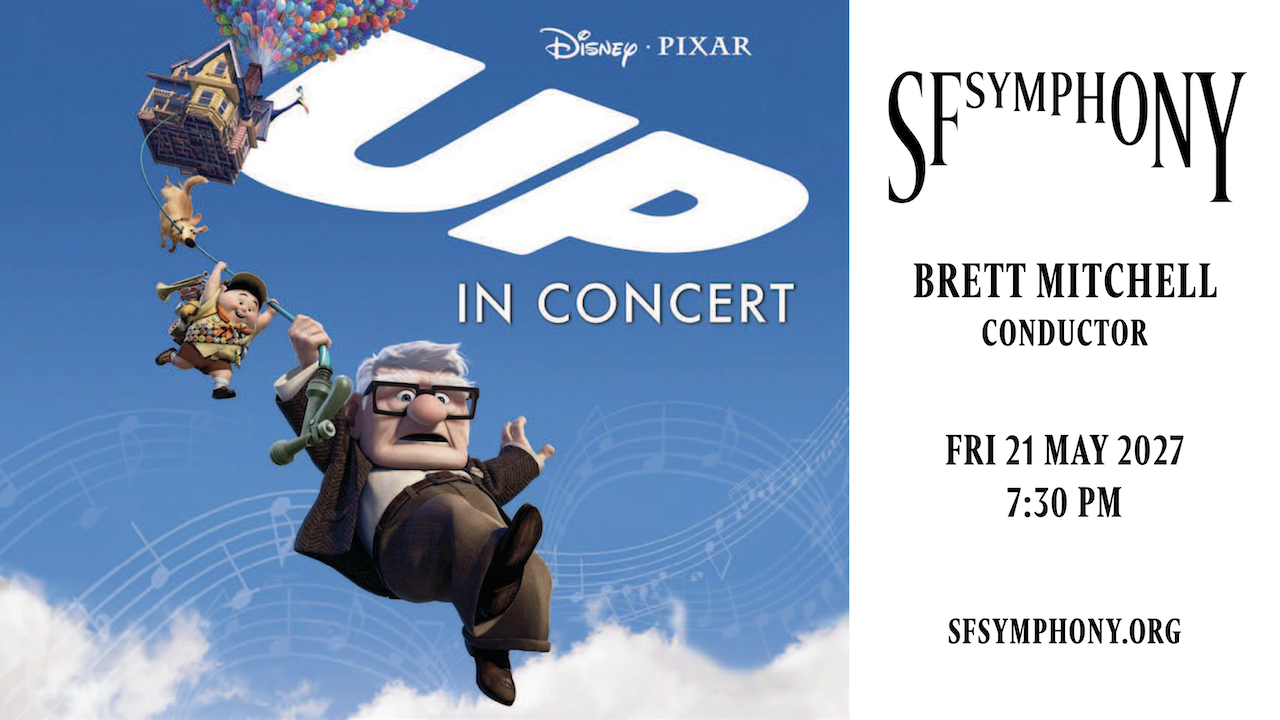
SAN FRANCISCO — The San Francisco Symphony has announced that their 2026-27 season will feature the return of guest conductor Brett Mitchell to the podium.
On Friday, May 21, 2027, Mitchell will lead the orchestra in a performance of Michael Giacchino’s Oscar-winning score for Disney and Pixar’s Up while the film is screened above the Davies Symphony Hall stage.
Mitchell first led the San Francisco Symphony in July 2019 in a program of Berlioz and Mendelssohn.
Brett Mitchell to Lead Five Performances with the Houston Symphony in January 2027
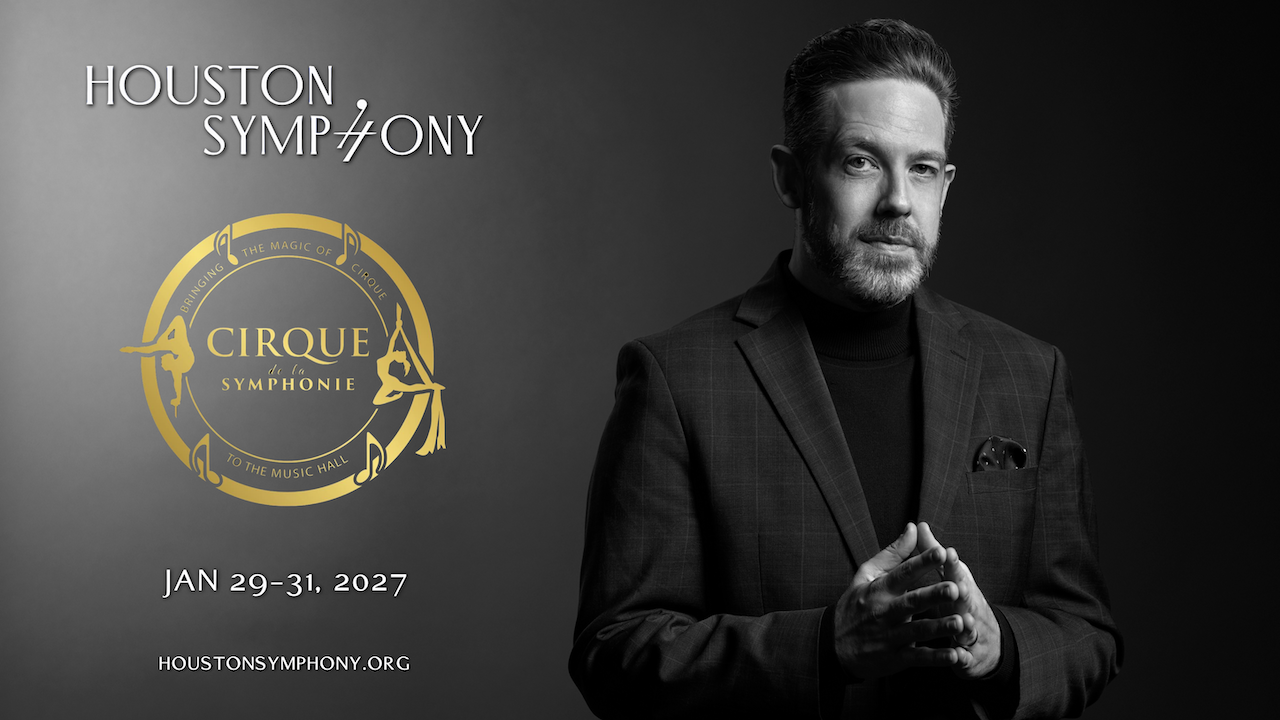
HOUSTON — The Houston Symphony has announced that Brett Mitchell will return in January 2027 to lead the orchestra in five performances with Cirque de la Symphonie at Jones Hall.
Mr. Mitchell and the orchestra will present three pops performances with the troupe:
Friday, January 29 at 7:30 p.m.
Saturday, January 30 at 7:30 p.m.
Sunday, January 31 at 2 p.m.
They will also present two family concerts:
Saturday, January 30 at 10 a.m.
Saturday, January 30 at 11:30 a.m.
Mr. Mitchell has been leading the Houston Symphony for almost 20 years since joining the orchestra as Assistant Conductor in the 2007-08 season. Since then, he has led more than 150 concerts with the ensemble, including upcoming performances of Nicholas Hooper’s score for Harry Potter and the Order of the Phoenix in June 2026.
Brett Mitchell Returns to the 2026 Blossom Music Festival with The Cleveland Orchestra
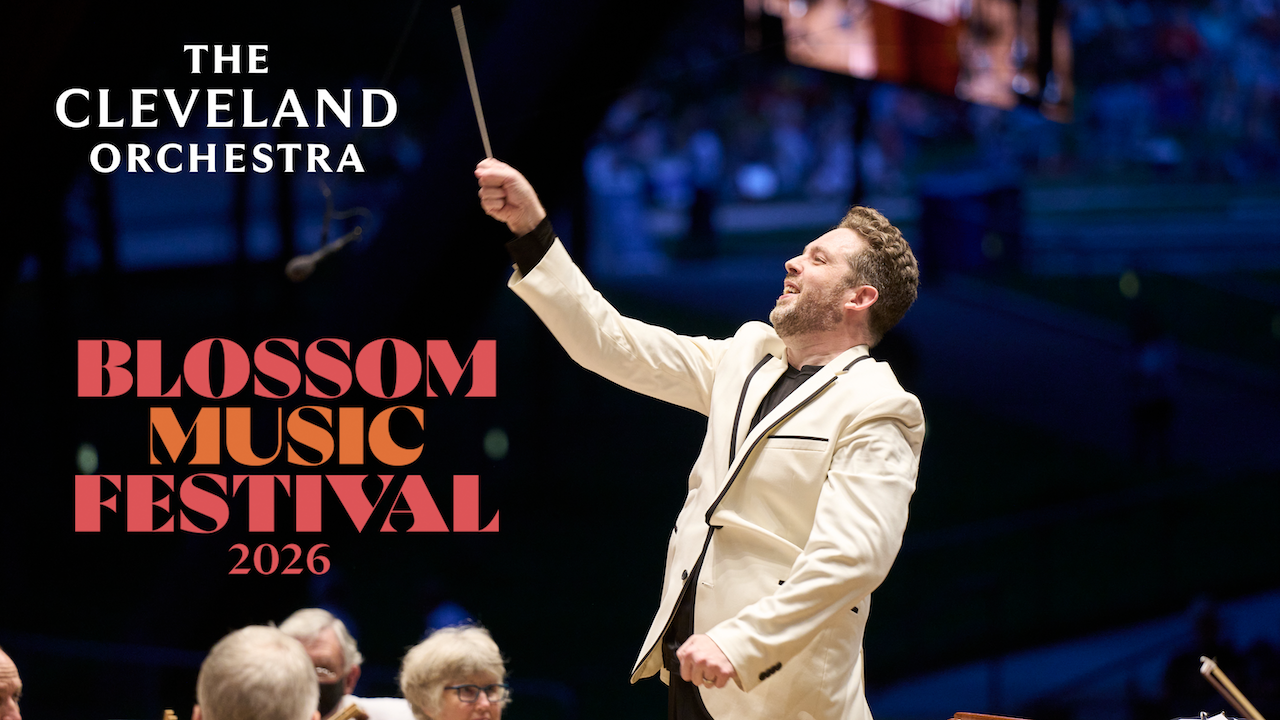
Brett Mitchell will lead The Cleveland Orchestra at the 2026 Blossom Music Festival. (Photograph by Roger Mastroianni)
CLEVELAND — The Cleveland Orchestra has announced that, for the third consecutive summer, Brett Mitchell will lead the orchestra in a weekend of performances at the 2026 Blossom Music Festival.
Mr. Mitchell and the orchestra will present John Williams’s Grammy-nominated score for the second film in the Harry Potter series, Harry Potter and the Chamber of Secrets, while the original film plays live on the big screen twice at Blossom Music Center:
Saturday, July 11 at 7 p.m.
Sunday, July 12 at 7 p.m.
For tickets and more information, please click here. To read a preview of the entire 2026 Blossom Music Festival, please click here.
Mr. Mitchell has been leading The Cleveland Orchestra for a dozen years since joining the orchestra as Assistant Conductor in the 2013-14 season. Since then, he has led more than 150 performances with the ensemble, including John Williams’s Oscar-nominated score for the first film in the Harry Potter series, Harry Potter and the Sorcerer’s Stone, at Blossom in July 2025.
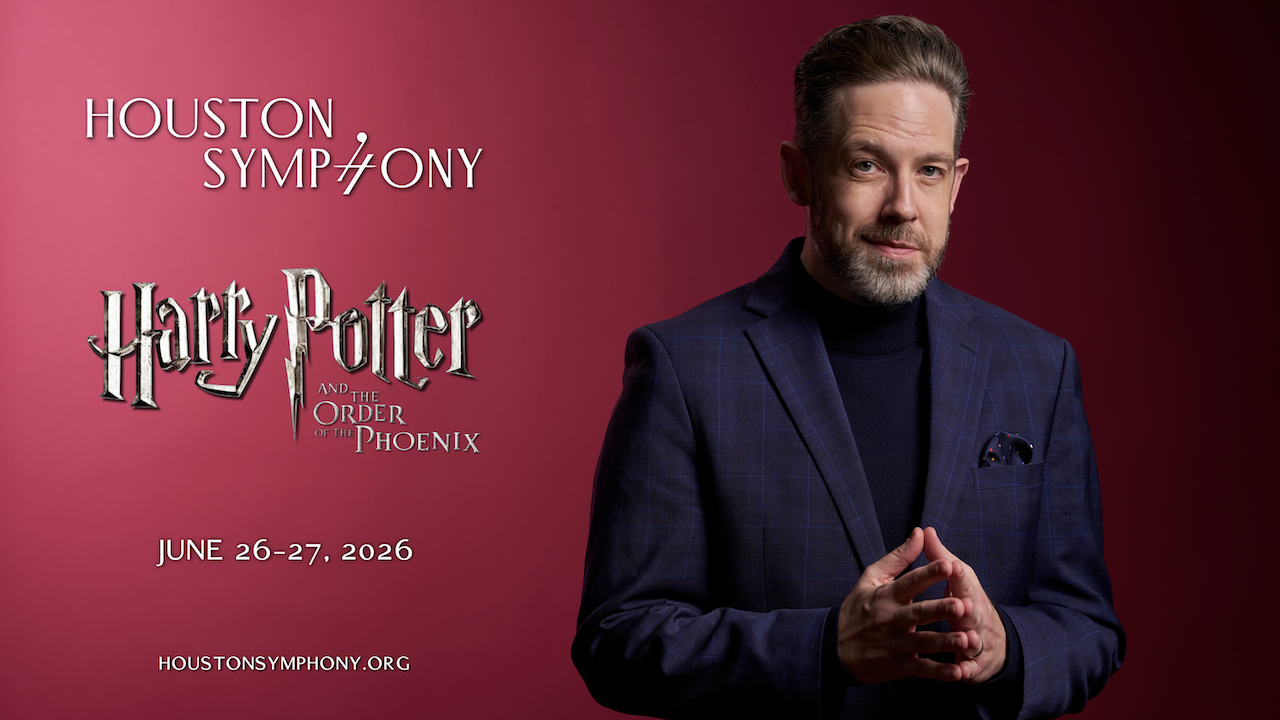
Brett Mitchell Returns to the Houston Symphony in June 2026
Brett Mitchell will return to the Houston Symphony in June 2026. (Photograph by Roger Mastroianni)
HOUSTON — The Houston Symphony has announced that Brett Mitchell will return to lead the orchestra in Nicholas Hooper’s score for Harry Potter and the Order of the Phoenix, the fifth film in the Harry Potter franchise.
Mr. Mitchell and the orchestra will present the film with live orchestral accompaniment twice at Jones Hall:
Friday, June 26 at 7:30 p.m.
Saturday, June 27 at 2 p.m.
For more information, please click here.
Mr. Mitchell has been leading the Houston Symphony for almost 20 years since joining the orchestra as Assistant Conductor in the 2007-08 season. Since then, he has led more than 150 performances with the ensemble, including John Williams’s Oscar-nominated score Harry Potter and the Sorcerer’s Stone in July 2023 and Patrick Doyle’s score for Harry Potter and the Goblet of Fire in June 2025.
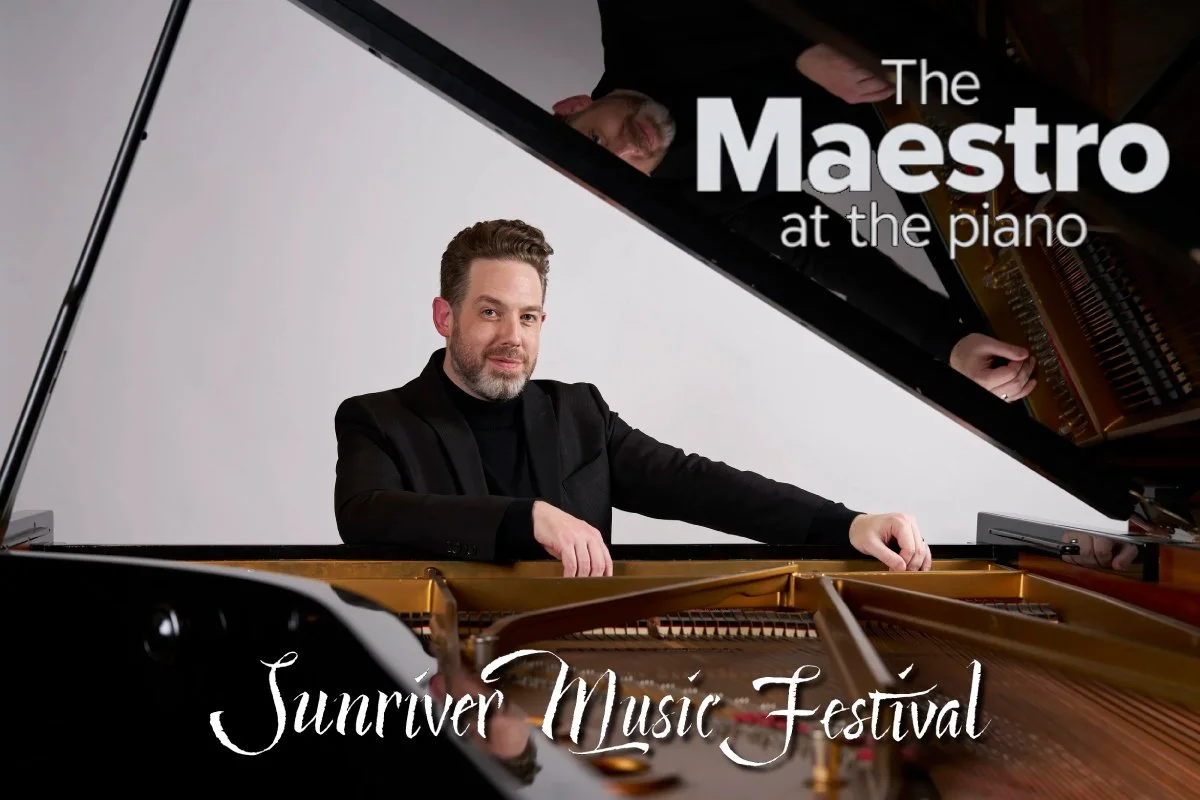
Preview: Sunriver Music Festival — The Maestro at the Piano
BEND, Ore. — The Source has published a preview of Brett Mitchell’s upcoming solo piano recital, presented by the Sunriver Music Festival:
Hailed for the breadth of his work on the podium and at the piano, Maestro Brett Mitchell has carved a unique path in the world of contemporary American classical music. Sunriver Music Festival’s Artistic Director & Conductor will present an exclusive solo piano recital featuring his own arrangements for film in Sunriver on April 11. Visit sunrivermusic.org for tickets to The Maestro at the Piano.
As a conductor, Mitchell currently serves as Music Director of the Pasadena Symphony and Artistic Director & Conductor of Oregon’s Sunriver Music Festival. He previously served as Music Director of the Colorado Symphony, Associate Conductor of The Cleveland Orchestra, and Assistant Conductor of both the Houston Symphony and Orchestre National de France. Working widely as a guest conductor, Mitchell has led the New York Philharmonic at David Geffen Hall, the Los Angeles Philharmonic at the Hollywood Bowl, and principal orchestras spanning the United States and beyond.
As a pianist, Steinway Artist Brett Mitchell has a devoted fanbase of his work at the keyboard. The high standard he has set with artistic and professional achievements makes it most appropriate that Mitchell is formally included on the Steinway Artist roster—a list of the most accomplished and discriminating artists in the world. His exceptionally active YouTube channel @brettmitchellconductor features his original solo piano videos of iconic cues from film history and landmark works from classical, jazz, and pop canons.
“Film music has always been one of my great musical loves. When the pandemic hit in 2020 and we couldn’t present orchestral music, I flexed my arranging chops, taking iconic scores from film music history and arranging them for solo piano. What began as a pandemic diversion has morphed into a continuing passion project that I’m now thrilled to share with more than 15,000 subscribers across my social platforms, and I couldn’t be more pleased as we gear up for Sunriver Music Festival’s “America @ 250” celebrations in August 2026 to share many of these iconic selections with our audience in Central Oregon. The art of film scoring was born during the American century, and I can’t imagine a better way to kick off our celebrations than with an intimate evening featuring some of my favorite music of all time. Please join me on April 11 in Sunriver.” - Artistic Director & Conductor Brett Mitchell
Mark your calendars for April 11 and visit sunrivermusic.org for tickets to Sunriver Music Festival’s exclusive concert The Maestro at the Piano. VIP ticketed guests are welcomed to an intimate post-concert reception offering wine, light fare and unhurried conversation with the maestro in an informal setting.
Click here to read the complete preview, and here to read the official press release from the Sunriver Music Festival.
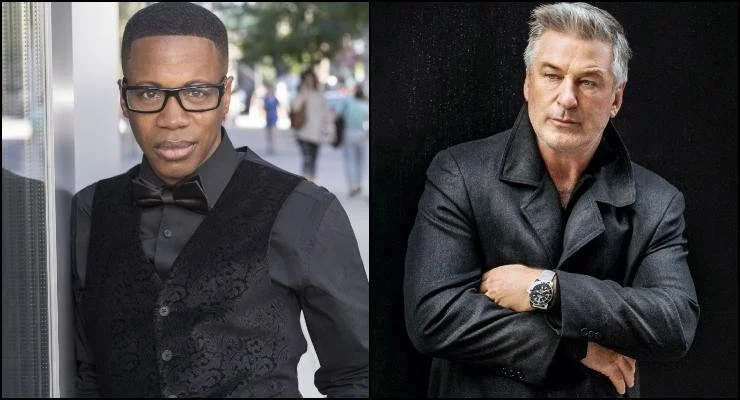
Alec Baldwin To Narrate Copland’s ‘Lincoln Portrait’ for Pasadena Symphony Season Finale
Emmy- and Golden Globe-winning actor joins America@250 concert celebrating the nation's 250th birthday, while Grammy-nominated pianist Terrence Wilson steps in on Gershwin concerto
PASADENA — The Pasadena Symphony has tapped actor Alec Baldwin to narrate Aaron Copland’s Lincoln Portrait at its season finale concert, America@250, on May 30 at Ambassador Auditorium. The program, led by Music Director Brett Mitchell, celebrates the nation’s semiquincentennial with a survey of American orchestral music spanning the last century.
“I can’t imagine a better way to wrap up our season and celebrate America’s 250th birthday than with these two extraordinary artists performing these two iconic works, and I couldn’t be more excited to share the stage with them both,” Mitchell said.
Baldwin has previously performed Lincoln Portrait with the Philadelphia Orchestra and serves as a board member and radio host of the New York Philharmonic. He follows narrators including Henry Fonda, James Earl Jones, Katharine Hepburn, Vincent Price and Copland himself.
Grammy-nominated pianist Terrence Wilson performs Gershwin’s Concerto in F. Wilson replaces pianist Joyce Yang, who was previously scheduled to perform Jonathan Leshnoff’s Rhapsody on America but is recovering from a temporary injury. The Baltimore Sun has hailed Wilson as “one of the biggest pianistic talents to have emerged in this country in the last 25 years.”
The program opens with John Williams’s Liberty Fanfare and also includes the Suite from Copland’s Appalachian Spring.
Baldwin’s credits include “The Hunt for Red October,” “Glengarry Glen Ross,” “Blue Jasmine” and “30 Rock,” for which he won three Emmy awards, three Golden Globes and seven consecutive Screen Actors Guild Awards — making him the actor with the most SAG Awards of all time.
Click here to read the official press release from the Pasadena Symphony, and here to read a preview from Pasadena Now.
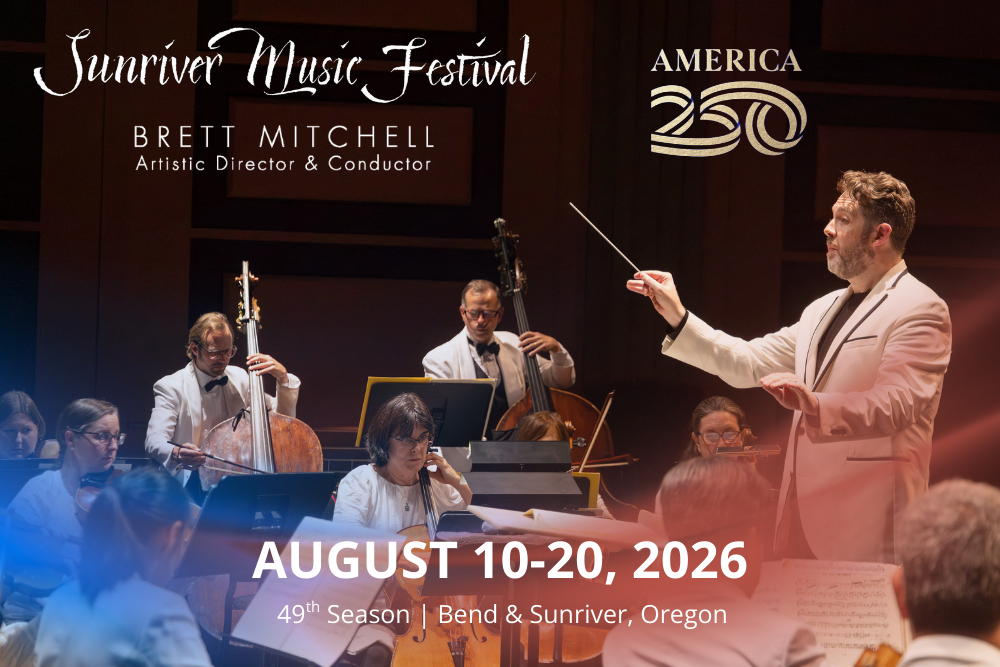
Sunriver Music Festival announces 2026 season, Brett Mitchell’s fifth as Artistic Director & Conductor
SUNRIVER, Ore. — The Sunriver Music Festival has announced details of its 2026 summer season, Brett Mitchell’s fifth as Artistic Director & Conductor:
As America celebrates 250 years in 2026, we honor one of its greatest gifts to the world: music. The 49th season programming, curated by Artistic Director & Conductor Brett Mitchell, will feature world-class orchestra musicians and acclaimed soloists performing eclectic works by American composers — Aaron Copland, Samuel Barber, William Grant Still, Joan Tower, Kevin Puts, Edgar Meyer and John Williams — alongside favorites by Beethoven, Bach, Mozart, Haydn, Schumann, and Mendelssohn and more.
The Summer Festival opens August 10 at Sunriver Resort’s historic Great Hall and closes August 20 at the iconic Tower Theatre in downtown Bend. Four classical concerts, a pops concert and a family concert will be presented. Featured artists include pianist Michelle Cann, violinists William Hagen and Tessa Lark, bass-baritone Timothy Jones, and the Central Oregon Mastersingers.
The classical season will consist of the following four programs:
Wed, Aug 12 | Sunriver Resort Great Hall - Sunriver, OR
AMERICA MEETS SCOTLAND
STILL - Darker America
BARBER - Violin Concerto
William Hagen, violin
MENDELSSOHN - Symphony No. 3, ‘Scottish’
Mon, Aug 10 | Sunriver Resort Great Hall - Sunriver, OR
BEETHOVEN, HAYDN, AND MADE IN AMERICA
JOAN TOWER - Made in America
BEETHOVEN - Piano Concerto No. 4
Michelle Cann, piano
HAYDN - Symphony No. 101, ‘Clock’
Thu, Aug 20 | Tower Theatre - Bend, OR
APPALACHIA AND SPRING
COPLAND - Suite from Appalachian Spring
EDGAR MEYER - Violin Concerto
Tessa Lark, violin
R. SCHUMANN - Symphony No. 1, ‘Spring’
Tue, Aug 18 | Tower Theatre - Bend, OR
THE GENIUS OF MUSIC
KEVIN PUTS - Einstein on Mercer Street
Timothy Jones, bass-baritone
J.S. BACH - Brandenburg Concerto No. 3
MOZART - Symphony No. 39
See our Upcoming Events page for complete repertoire, and visit sunrivermusic.org to learn more. Click here to read a preview in The Source.
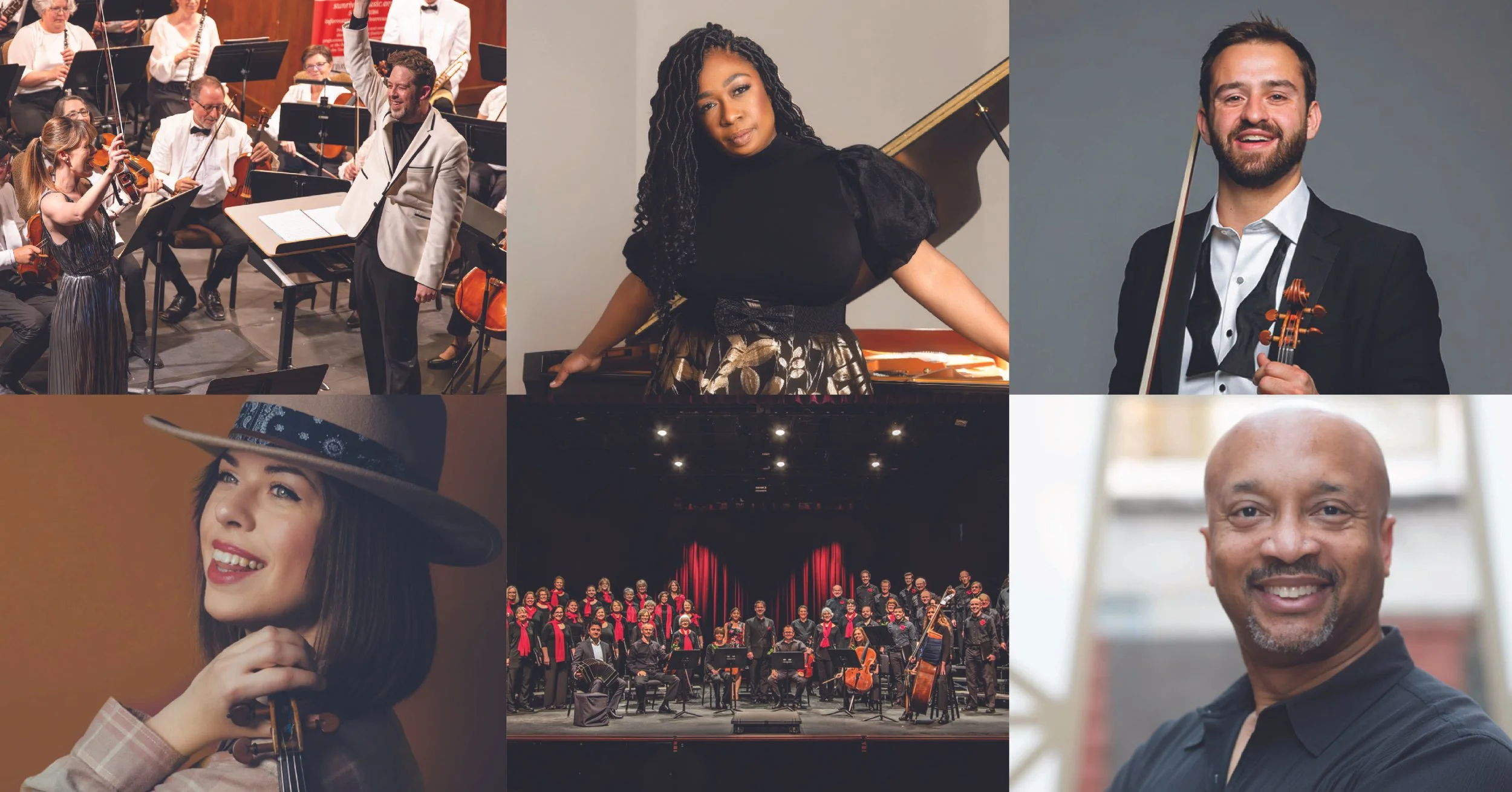
Artistic Director & Conductor Brett Mitchell will welcome pianist Michelle Cann, violinists William Hagen and Tessa Lark, bass-baritone Timothy Jones, and the Central Oregon Mastersingers as featured artists during the 2026 Sunriver Music Festival.
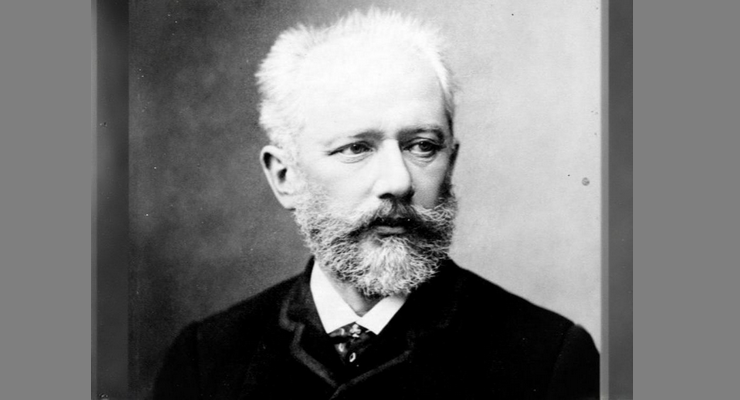
Preview: Pasadena Symphony Takes on Tchaikovsky’s Final Symphony, the Work He Premiered Nine Days Before His Death
Grammy-winning pianist Michelle Cann joins Music Director Brett Mitchell for a program spanning Mozart to a contemporary American premiere
PASADENA — Pasadena Now has published a preview of the Pasadena Symphony’s upcoming third subscription program of the 2025-26 season:
Tchaikovsky completed six symphonies. The last one, he said, contained his “whole soul.” Nine days after he conducted its premiere in St. Petersburg in October 1893, he was dead.
The Pasadena Symphony will perform that work — Symphony No. 6 in B minor, the “Pathétique” — on Saturday, February 21, at Ambassador Auditorium, with Music Director Brett Mitchell on the podium. The program also features Grammy-winning pianist Michelle Cann in Mozart’s Piano Concerto No. 23 and “Beacon,” an orchestral work by University of Colorado Boulder composer Jeffrey Nytch. Performances are at 2 p.m. and 8 p.m.
The concert is part of Mitchell’s second season leading the Pasadena Symphony, a season built around American music in anticipation of the nation’s 250th birthday in 2026. “As we close in on America’s 250th birthday next summer, I’m excited to celebrate the best of American orchestral music, past and present, all season long, pairing new American repertoire with great masterworks of the past,” Mitchell said when he announced the season’s programming, according to a Pasadena Symphony press statement.
Nytch’s “Beacon,” the American work on the February 21 program, was commissioned by the Boulder Chamber and premiered by the Boulder Philharmonic in November 2023. It was written to mark the 75th anniversary of the Boulder Star, a constellation of lights on Flagstaff Mountain that has been illuminated during the holiday season and at times of community crisis. “I immediately had the idea of writing a piece of music to celebrate that,” Nytch said. “Literally by the time I got home, I already knew that the piece was going to be titled ‘Beacon.'” The work opens with brightness, moves into somber reflection, and returns to light — a structure Nytch said was shaped by the Star’s dual role as a holiday symbol and a marker of collective grief.
Cann, the evening’s piano soloist, has become one of the most in-demand concert pianists of her generation, according to her management biography. A leading interpreter of the music of Florence Price, she performed the New York City premiere of Price’s Piano Concerto in One Movement in 2016 and the Philadelphia premiere with The Philadelphia Orchestra in 2021. Her recording of that concerto with the New York Youth Symphony won a Grammy Award in 2023 for Best Orchestral Performance. In 2025, she won a second Grammy, for Best Classical Solo Vocal Album, for “Beyond the Years: Unpublished Songs of Florence Price,” recorded with soprano Karen Slack. She holds the inaugural Eleanor Sokoloff Chair in Piano Studies at the Curtis Institute of Music and is on the piano faculty of the Manhattan School of Music.
In Pasadena, Cann performs Mozart’s Piano Concerto No. 23 in A major, K. 488, completed in March 1786 while the composer was also finishing his opera “Le nozze di Figaro.” The concerto replaces the oboes found in most Mozart concertos with clarinets, producing a darker, more intimate coloring. Its slow movement, in the rare key of F-sharp minor, is the only movement Mozart ever wrote in that key.
Mitchell, who was named the Pasadena Symphony’s sixth music director in March 2024, previously served as Music Director of the Colorado Symphony and Associate Conductor of The Cleveland Orchestra. In May 2025, he stepped in with less than 24 hours’ notice for his subscription debut with the New York Philharmonic, according to his management biography. “In many ways, joining the Pasadena Symphony as Music Director is really coming full circle for me,” Mitchell said when his appointment was announced. “So many of our musicians are these iconic studio players whose work I’ve known and loved for decades.”
The Pathétique, which anchors the second half of the program, carries biographical weight that few symphonies can match. Tchaikovsky called it his “Passionate Symphony,” from the Russian “patetitcheskaja,” meaning passionate or emotional. The title was mistranslated into French after his death, giving the work its now-familiar name. The symphony’s final movement fades into silence — an ending that, given Tchaikovsky’s death shortly after, has prompted more than a century of debate about the composer’s state of mind.
To read the complete preview, please click here.