
Preview: Pasadena Symphony Takes on Tchaikovsky’s Final Symphony, the Work He Premiered Nine Days Before His Death
Grammy-winning pianist Michelle Cann joins Music Director Brett Mitchell for a program spanning Mozart to a contemporary American premiere
PASADENA — Pasadena Now has published a preview of the Pasadena Symphony’s upcoming third subscription program of the 2025-26 season:
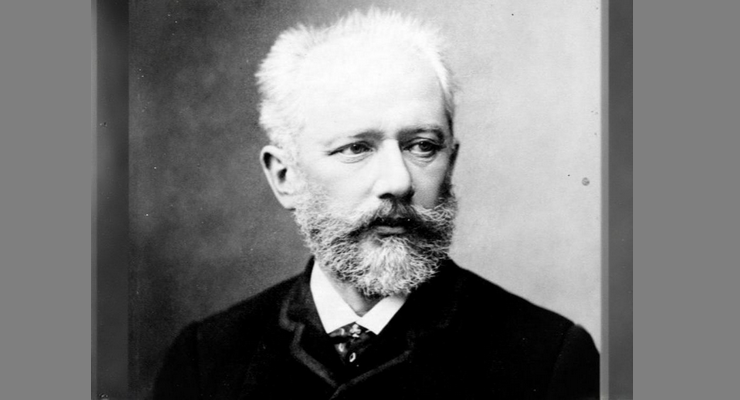
Tchaikovsky completed six symphonies. The last one, he said, contained his “whole soul.” Nine days after he conducted its premiere in St. Petersburg in October 1893, he was dead.
The Pasadena Symphony will perform that work — Symphony No. 6 in B minor, the “Pathétique” — on Saturday, February 21, at Ambassador Auditorium, with Music Director Brett Mitchell on the podium. The program also features Grammy-winning pianist Michelle Cann in Mozart’s Piano Concerto No. 23 and “Beacon,” an orchestral work by University of Colorado Boulder composer Jeffrey Nytch. Performances are at 2 p.m. and 8 p.m.
The concert is part of Mitchell’s second season leading the Pasadena Symphony, a season built around American music in anticipation of the nation’s 250th birthday in 2026. “As we close in on America’s 250th birthday next summer, I’m excited to celebrate the best of American orchestral music, past and present, all season long, pairing new American repertoire with great masterworks of the past,” Mitchell said when he announced the season’s programming, according to a Pasadena Symphony press statement.
Nytch’s “Beacon,” the American work on the February 21 program, was commissioned by the Boulder Chamber and premiered by the Boulder Philharmonic in November 2023. It was written to mark the 75th anniversary of the Boulder Star, a constellation of lights on Flagstaff Mountain that has been illuminated during the holiday season and at times of community crisis. “I immediately had the idea of writing a piece of music to celebrate that,” Nytch said. “Literally by the time I got home, I already knew that the piece was going to be titled ‘Beacon.'” The work opens with brightness, moves into somber reflection, and returns to light — a structure Nytch said was shaped by the Star’s dual role as a holiday symbol and a marker of collective grief.
Cann, the evening’s piano soloist, has become one of the most in-demand concert pianists of her generation, according to her management biography. A leading interpreter of the music of Florence Price, she performed the New York City premiere of Price’s Piano Concerto in One Movement in 2016 and the Philadelphia premiere with The Philadelphia Orchestra in 2021. Her recording of that concerto with the New York Youth Symphony won a Grammy Award in 2023 for Best Orchestral Performance. In 2025, she won a second Grammy, for Best Classical Solo Vocal Album, for “Beyond the Years: Unpublished Songs of Florence Price,” recorded with soprano Karen Slack. She holds the inaugural Eleanor Sokoloff Chair in Piano Studies at the Curtis Institute of Music and is on the piano faculty of the Manhattan School of Music.
In Pasadena, Cann performs Mozart’s Piano Concerto No. 23 in A major, K. 488, completed in March 1786 while the composer was also finishing his opera “Le nozze di Figaro.” The concerto replaces the oboes found in most Mozart concertos with clarinets, producing a darker, more intimate coloring. Its slow movement, in the rare key of F-sharp minor, is the only movement Mozart ever wrote in that key.
Mitchell, who was named the Pasadena Symphony’s sixth music director in March 2024, previously served as Music Director of the Colorado Symphony and Associate Conductor of The Cleveland Orchestra. In May 2025, he stepped in with less than 24 hours’ notice for his subscription debut with the New York Philharmonic, according to his management biography. “In many ways, joining the Pasadena Symphony as Music Director is really coming full circle for me,” Mitchell said when his appointment was announced. “So many of our musicians are these iconic studio players whose work I’ve known and loved for decades.”
The Pathétique, which anchors the second half of the program, carries biographical weight that few symphonies can match. Tchaikovsky called it his “Passionate Symphony,” from the Russian “patetitcheskaja,” meaning passionate or emotional. The title was mistranslated into French after his death, giving the work its now-familiar name. The symphony’s final movement fades into silence — an ending that, given Tchaikovsky’s death shortly after, has prompted more than a century of debate about the composer’s state of mind.
To read the complete preview, please click here.