

NEWS

Feature: ‘Simply a Composer’s Advocate’
Photo by Roger Mastroianni
The American technical formal apparel company Coregami has announced Brett Mitchell as a brand ambassador, and journalist Owen Clarke has marked the new partnership with a 2,000-word feature article about the multifaceted conductor, composer, and pianist.
Simply a Composer’s Advocate
In a profession often defined by tradition and the worship of past masters, conductor and Coregami ambassador Brett Mitchell has a strict rule: never copy the giants.
“I would rather be a first-rate Brett Mitchell than a second-rate Leonard Bernstein,” he told me. “I want everything that I do, for better or worse, to come genuinely from me. That's the only way it'll be new.”
Born and raised in Seattle, Washington, Mitchell was the oldest of three boys. No one else in his family was a musician, and he wasn’t introduced to classical music until high school. As a kid, he was surrounded by the pop artists of his parents’ generation, like the Beatles, Simon and Garfunkel, Billy Joel, and Elton John. As he grew into his teens, in the early 1990s, his influences changed. “There was no way to escape grunge in Seattle at that time,” he joked. “If you go look at my 8th grade yearbook, our jazz band photo, we’re all in flannels and ripped jeans,” he said. “Nirvana, Pearl Jam, Soundgarden, those bands were huge for me back then.”
As he entered high school, however, he became more interested in classical music. In particular, he loved the soundtracks of popular films at the time, movies like Superman, Indiana Jones, E.T., and Star Wars—all scored by John Williams. “I wouldn’t have had a career if it weren’t for falling in love with John’s music,” Mitchell said.
Mitchell knew he loved music, but he wasn’t sure how he wanted to approach it. For a time he thought he might want to be a pianist, or perhaps a film composer. So he started writing bigger and bigger pieces, and his high school band director eventually said, “Why don’t you conduct this piece that you wrote?”
And in October of 1995, exactly thirty years ago, a 16-year-old Mitchell conducted his first piece of music. “Was I terrified? Yes, absolutely,” he said, laughing. “But it was that night in October ‘95 that I really decided, ‘Okay, I think this is the direction I want to go in life.’” After high school, he earned an undergraduate degree in music composition from Western Washington University, and then a master’s and doctorate in orchestral conducting from the University of Texas. By age 26, Mitchell was teaching at Northern Illinois University, and later that same year, he landed his first professional job as an assistant conductor for Orchestre National de France in Paris. From there, he was off to the races.
(Readers can read Mitchell’s full biography on his website. Currently, he is the music director of the Pasadena Symphony, and the artistic director and conductor for Oregon’s Sunriver Music Festival. Just two weeks ago, he was named piano company Steinway & Sons' newest Steinway Artist.)
But Mitchell wasn’t inclined to dwell on his lengthy (and admittedly prestigious) resume, reminiscing on where he’s conducted or directed. “I’ve been doing this for 30 years now,” he told me, early on in our interview. “And when you get to this point, every interview is the same interview.”
Instead, we focused on the philosophy and lifestyle that shape the man behind the baton.

Photo by Roger Mastroianni
Life Above 7,000 Feet
Mitchell has been married to his wife, Angela, for a little over ten years, and together they have two children, a 20-month-old girl, Rose, and a boy, Will, who turns four on Christmas Eve. His family has lived in the foothills outside Denver, Colorado since 2017, when he was named music director of the Colorado Symphony. “We love living here, because we love the outdoors,” he said.
The family’s home is at 7,300 feet, and backs up to the Bear Creek Highlands. “It's like 880 acres of open green space,” he said. “There are a dozen miles of trails right outside our back door, and it’s sunny 300 days a year, which is a big change, for me, from Seattle.” When the trails are clear, Mitchell and his family are hiking, but when it snows, they strap on snowshoes and hit the trails anyway. “Even in the winter, maybe you get a snowstorm and it dumps a foot of snow on you,” he said, “but the next day is almost invariably a bluebird day, crystal clear, bright blue sky, and we’re out there.”
Beyond the accessibility to pristine nature, there are other advantages, as a performer and conductor, to living in Colorado, Mitchell said. Chiefly, rehearsing at high elevation is a great way to build strong lungs. Mitchell recalled conducting his first concert in Colorado, in 2016. He noticed some oxygen tanks backstage at the concert hall. “I was like, ‘Oh, that’s funny,’” he remarked. “But then I was conducting, I think it was a Tchaikovsky symphony, one that ends big and loud and fast, with lots of energy, and at the end I was really, really winded.” The oxygen tanks weren’t just a gimmick. Players who come to Colorado, he said, will often come a day or two early to acclimate to the elevation.
“There is a reason we train our Olympic teams in Colorado,” he added. “Working out up here, when I go down to sea level, I feel like Superman.”
This passion for an active lifestyle is also what drew Mitchell to Coregami. “Conductors always look for the most comfortable thing possible to rehearse in, attire that breathes, that lets us move the way we want to move. Then we get to the concert hall and we have to put on, well, the most restrictive clothing imaginable!” He laughed. “Coregami figured out a way to rectify that problem.”

Brett Mitchell leads the Colorado Symphony at Boettcher Concert Hall. Photo by Brandon Marshall
More Than Waving a Stick
As a conductor, Mitchell sees his job as multi-faceted, with responsibilities that go far beyond the music. The books on the shelves in his studio, where he sat when we conducted our interview, reflect this. “There are at least as many books on sports psychology and coaching as there are on conducting,” he said. “I’m looking at Phil Jackson, Eleven Rings. Pat Summitt, Sum It Up. Robert Greene, The 48 Laws of Power. I'm looking at John Wooden, at David Brooks, at books about Kobe [Bryant].”
Why so many books about athletics? Mitchell is blunt. “Coaches of professional athletes have the most insight in terms of how to deal with what I deal with as a conductor, which is elite talent,” Mitchell said. “These people are the best in the world at what they do, and they know it. Your job is to make them better, which isn’t easy. So yes, my role is diplomat. It's politician. It's counselor. It's psychologist.”
In fact, Mitchell said his job is “as much about understanding people as it is about understanding music,” if not more, and that it’s not about taking charge and making unilateral decisions, but about organically building a consensus. “While I certainly bring my ideas to the podium, I am not the sole proprietor of good ideas,” he admitted. He added that to the layman, a conductor may seem like a shotcaller. That’s not how it is. “You probably think of this guy standing up there on a box, waving a stick in your face saying, ‘My way or the highway!’ Nothing could be further from the truth,” he said.
Mitchell likened his role to being an “arbiter of taste.” He has the final say, of course, but his voice should be the mouthpiece through which the orchestra speaks. “I try to be as open as I possibly can,” he said. “That give and take is what I love about conducting.”
When I asked Mitchell about some of the quotes or books that have inspired his philosophies on conducting, he was quick to name one by Austrian-born American composer Erich Leinsdorf: The Composer’s Advocate. “This book is great,” Mitchell admitted, “but honestly the title of the book was more revealing to me than anything inside it, because it cuts to the heart of what our job is as conductors. We're advocating on behalf of the composer.”
Mitchell is also fond of a line from the Pulitzer Prize-winning musical Sunday in the Park with George, by Stephen Sondheim, about the work of French painter Georges Seurat. “The line comes at the end of Act II, toward the very end of the show,” Mitchell explained. “Seurat’s in a creative rut, he doesn't know what to do. He doesn't know how to get to the next place. And his muse [Dot] tells him, ‘Anything you do, let it come from you. Then it will be new. Give us more to see.’”
Mitchell loves the quote so much he had it engraved on a piece of wood and mounted on the wall in his studio. This quote was the genesis for what he told me at the beginning of this piece, and it’s a personal mantra for Mitchell, a reminder that, whatever subconscious influences he may absorb as he goes about his life, he needs to be his own artist, for better or worse. As much as Williams, Bernstein, Sondheim, Tchaikovsky, or any other great composer from days gone by may have inspired him, he’s careful never to fall into the trap of emulating their work.
“I want to give audiences something new,” he said.

Brett Mitchell leads the New York Philharmonic at David Geffen Hall. Photo by Brandon Patoc
We’re Here to Show the World What Can Be
Much of Mitchell’s work today involves mentoring young people. He served as music director for the Cleveland Orchestra Youth Orchestra for four years, and has taught at a number of programs for budding musicians. But in an era of generative artificial intelligence—when youth are encouraged to use generative AI for everything from writing essays to creating imagery—he admits that there’s a lot of pressure for youth to mimic. Convincing kids to “let everything you do come from you” isn’t always easy.
Mitchell says that if he had anything to say to the young artists of today, growing up in an era of AI, it’s to not get discouraged. “AI will never be able to stumble upon happy accidents the way humans do,” he said. “AI is trained on the past. It’s trained to take the past, and distill into what it thinks is best for the present. But the most interesting, beautiful things are often those that arrive by accident.” Mitchell often plays jazz in his free time, and remarked on the popular joke that “there are no wrong notes in jazz,” because, “if you hit a note that you didn't mean to hit, all you have to do is take that little mistake and then do it again. Do it again and make it a feature, not a bug. This is something only a human brain can do.”
Another piece of advice Mitchell has for budding orchestral players is to remember that synchronization isn’t the goal. “In orchestras, there’s an emphasis placed on playing together,” he said. “If there's a chord on the downbeat, we all play that chord on the downbeat together. But we have to remember, the end goal is not to play with each other. The end goal is to play for each other.”
He gave an example. “If it's the oboe solo, that may mean the violins need to tone it down, and play more transparently. It’s not just about being in the same place at the same time. It's understanding when it's your turn and when it's somebody else's turn. You have to ask yourself, ‘Am I doing everything that I can to support my colleague?’”
This, Mitchell said, is part of what makes playing, conducting, and listening to orchestral music so special. It’s a collaborative effort, it’s many individuals coming together to craft something beautiful. “Anything that you’re gonna accomplish in your life, if it is worthwhile, you will accomplish it with other people,” Mitchell said.
This is, in part, why he isn’t worried about the future of the arts. Developments in technology like artificial intelligence will take some jobs. That’s only natural. “When’s the last time you saw an elevator operator?” Mitchell joked. But he doesn’t see it ever having a fatal impact on the arts, simply because by nature, AI is retrospective.
“We can't write symphonies with robots. We can't paint pictures with robots,” he said. “Or we can, but the symphonies AI writes, the paintings AI creates, these are just a conglomeration of everything that already has been, they aren’t a lens into things that could be.”
He paused. “We have to remember, that's what artists are here for. We’re here to show the world what could be.”

Brett Mitchell leads The Cleveland Orchestra at Blossom Music Center. Photo by Roger Mastroianni
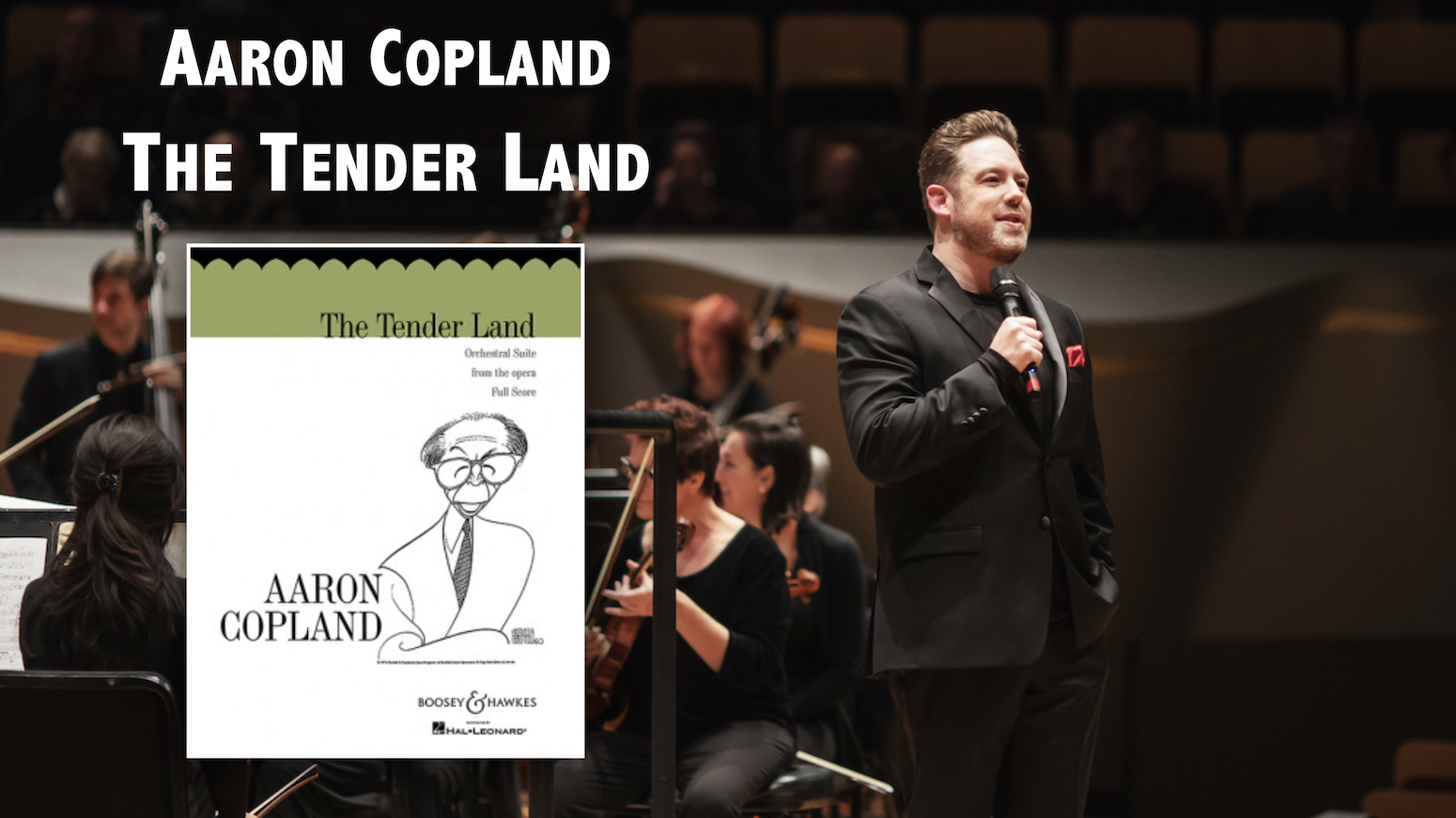
Video: Brett Mitchell explores Copland’s ‘The Tender Land’
DENVER — Brett Mitchell has released a new video exploring Aaron Copland’s Suite from The Tender Land.
Presented live at Boettcher Concert Hall in April 2018 as part of a program entitled The American Voice, Mr. Mitchell leads the Colorado Symphony in demonstrations exploring what makes the 1954 opera sound so distinctly American.
All three movements of the Suite are explored:
I. Introduction and Love Music
II. Party Scene
III. Finale: The Promise of Living
Watch the complete demonstration above, or learn more on YouTube, Facebook, and Twitter.

Brett Mitchell to step down from Colorado Symphony after five seasons as artistic leader
Brett Mitchell will step down as Music Director of the Colorado Symphony on June 30, 2021. (Photo by Amanda Tipton)
Published Jan 29, 2021 Updated Feb 9, 2021
DENVER — After five seasons at the artistic helm of the Colorado Symphony, Brett Mitchell will step down from his post on June 30, 2021. Mr. Mitchell has served as Music Director since the 2017-18 season, and previously served as Music Director Designate during the 2016-17 season.
From the official press release from the Colorado Symphony:
During Mitchell’s five-season tenure, he is credited with deepening the orchestra’s engagement with its audience via in-depth demonstrations from both the podium and the piano. He also expanded the orchestra’s commitment to contemporary American repertoire—with a particular focus on the music of Mason Bates, Missy Mazzoli, and Kevin Puts—through world premieres, recording projects, and commissions. In addition, Mitchell spearheaded collaborations with such local partners as Colorado Ballet, Denver Young Artists Orchestra, and El Sistema Colorado. The cancellation of the 2020/21 season, due to the COVID-19 health pandemic, halted the progress of other collaborations and recordings previously planned under Mitchell’s direction.
“The Colorado Symphony is grateful for Brett Mitchell's contributions the past five seasons and is excited to enter an unprecedented period of discovery in artistic leadership in the organization's nearly 100-year story,” said Jerome H. Kern, Chief Executive Officer & Board Chair for the Colorado Symphony. “We will look forward to seeing Maestro Mitchell on the podium again in future seasons…”
In The Denver Post’s announcement of his departure, critic-at-large John Wenzel writes that “Mitchell has been a bright and engaging presence over the years, delving into the history of certain well-worn pieces while leading expert renditions of them.”

Update: COVID-19 cancellations

Published March 13, 2020 Updated January 9, 2021
Due to the outbreak of COVID-19, all of Brett Mitchell’s performances from March 13 through October 4, 2020, were canceled.
Mr. Mitchell returned to the podium for his subscription debut of four performances with the Fort Worth Symphony Orchestra from October 30 through November 1, 2020, but the remainder of his 2020 performances have been canceled.
The Colorado Symphony—of which Mr. Mitchell serves as Music Director—has canceled all performances through May 31, 2021.
The following list of canceled performances—totaling 53 as of January 9, 2021—will be updated as further information becomes available.
March 13 and 14, 2020
SAN ANTONIO SYMPHONY
MISSY MAZZOLI - Holy Roller
MOZART - Symphony No. 29 in A major, K. 201
PROKOFIEV - Violin Concerto No. 2 (Angelo Xiang Yu, violin)
RAVEL - Rapsodie espagnole
March 27, 2020
COLORADO SYMPHONY
ADAM SCHOENBERG - Finding Rothko
RACHMANINOFF - Isle of the Dead
BEETHOVEN - String Quartet No. 16 in F major, Op. 135
JAMES CLARKE - Symphony No. 2 [WORLD PREMIERE]
March 28 and 29, 2020
COLORADO SYMPHONY
Disney FANTASIA - Live in Concert
May 1, 2, and 3, 2020
COLORADO SYMPHONY
MAHLER - Symphony No. 9
May 16, 2020
COLORADO SYMPHONY
LAMONT JAZZ ORCHESTRA
STILL - Festive Overture
BERNSTEIN - Prelude, Fugue and Riffs
ELLINGTON - Harlem
May 22, 23, and 24, 2020
COLORADO SYMPHONY & CHORUS
SAINT-SAËNS - “Bacchanale” from Samson et Dalila
MASON BATES - Children of Adam: Songs of Creation
BEETHOVEN - Symphony No. 3, “Eroica"
July 11, 2020
THE CLEVELAND ORCHESTRA
BERNSTEIN - Symphony No. 2, “The Age of Anxiety” (Kirill Gerstein, piano)
COPLAND - Suite from Appalachian Spring
COPLAND - Suite from Billy the Kid
July 26, 2020
COLORADO SYMPHONY
SHOSTAKOVICH - Festive Overture
LISZT - Les Préludes
BEETHOVEN - Symphony No. 9
This performance has been rescheduled for July 25, 2021.
August 20, 2020
LOS ANGELES PHILHARMONIC
MOZART - Amadeus
(Complete film with live orchestral accompaniment)
September 8 and 9, 2020
COLORADO SYMPHONY
BEETHOVEN - Coriolan Overture
BEETHOVEN - Violin Concerto (Paul Huang, violin)
BEETHOVEN - Symphony No. 5
September 18, 19, and 20, 2020
COLORADO SYMPHONY
KORNGOLD - Sursum Corda (Lift Up Your Hearts)
R. STRAUSS - Suite from Der Rosenkavalier
BEETHOVEN - Piano Concerto No. 5, “Emperor” (Olga Kern, piano)
October 2, 3, and 4, 2020
COLORADO SYMPHONY
KEVIN PUTS - …this noble company
ELGAR - Cello Concerto (Joshua Roman, cello)
SHOSTAKOVICH - Symphony No. 5
November 20, 21, and 22, 2020
COLORADO SYMPHONY
HINDEMITH - Symphonic Metamorphosis of Themes by Weber
RACHMANINOFF - Rhapsody on a Theme of Paganini (Joyce Yang, piano)
TCHAIKOVSKY - Symphony No. 2, “Little Russian”
December 10-23, 2020
THE CLEVELAND ORCHESTRA
TRADITIONAL (arr. Anderson) - “Wassail Song” from Suite of Carols
TCHAIKOVSKY (arr. Ferrari) - Selections from The Nutcracker
TRADITIONAL (arr. Kay/Lavender) - Deck the Hall
VAUGHAN WILLIAMS (arr. Greaves) - Fantasia on “Greensleeves”
TRADITIONAL (arr. Mairs) - Holly and the Good King
BERLIN (arr. Jackfert) - White Christmas [world premiere]
ANDERSON (arr. Caputo) - Sleigh Ride
Mr. Mitchell was also to lead a jazz trio from the piano to accompany Broadway star Capathia Jenkins:
CAHN/STYNE - Let It Snow! Let It Snow! Let It Snow!
FOSTER/THOMPSON-JENNER - Grown-Up Christmas List
COOTS/GILLESPIE - Santa Claus Is Comin’ to Town
December 31, 2020
COLORADO SYMPHONY
A Night in Vienna - New Year’s Eve
March 20, 2021
PASADENA SYMPHONY
ADAM SCHOENBERG - Finding Rothko
GRIEG - Piano Concerto (Andrew Tyson, piano)
MOZART - Symphony No. 40
April 9, 10, and 11, 2021
COLORADO SYMPHONY & CHORUS
WAGNER - “Good Friday Music” from Parsifal
MASON BATES - Resurrexit
BRAHMS - A German Requiem
Anna Christy, soprano | John Brancy, baritone
April 30, May 1 and 2, 2021
COLORADO SYMPHONY
RAVEL - Noble and Sentimental Waltzes
PROKOFIEV - Violin Concerto No. 2 (Stefan Jackiw, violin)
STRAVINSKY - Petrushka
May 28, 29, and 30, 2021
COLORADO SYMPHONY & CHORUS
MAHLER - Symphony No. 2, “Resurrection”
Felicia Moore, soprano | Susan Platts, alto

Video: Brett Mitchell explores Mahler 9 with the Colorado Symphony
Brett Mitchell and a virtual ensemble of Colorado Symphony musicians explore Mahler's Ninth Symphony.
DENVER — The Colorado Symphony and Music Director Brett Mitchell have released a new video exploring Gustav Mahler’s Ninth Symphony.
Mr. Mitchell and the orchestra were to have performed the work in May 2020, but those performances were canceled due to the COVID-19 outbreak.
Instead, Mr. Mitchell explores the work from the piano at home, and is joined virtually by members of the Colorado Symphony for demonstrations of three orchestral excerpts from Mahler’s final masterpiece.
Mr. Mitchell is also joined by his wife, soprano Angela Mitchell, for demonstrations from Mahler’s Kindertotenlieder and the hymn Abide With Me.
The video originally premiered on Wednesday, September 9 on both YouTube and Facebook, and may now be viewed on both platforms on demand.

Gustav Mahler (1909)

Audio: Brett Mitchell on Billy Joel and Beethoven
Beethoven’s Pathétique Sonata forms the chorus of Billy Joel’s “This Night”. (Graphic: Classic FM)
DENVER — Brett Mitchell has shared a reminiscence about Billy Joel and Beethoven with Colorado Public Radio as part of CPR Classical’s Beethoven 250 series:
When Brett Mitchell, Music Director of the Colorado Symphony, was a teenager, he watched the 1990s Beethoven biopic “Immortal Beloved” in the living room of his home in Seattle.
“And I asked my mother, ‘Why are they playing a Billy Joel song in the middle of a Beethoven movie?’” Mitchell recalls.
He was a Billy Joel fan as a teenager. He still is, he says.
That Beethoven “tune” in the movie was the Pathétique Sonata. To Mitchell, it sounded just like Joel’s song “This Night”. In fact, Joel credits “L.v. Beethoven” as co-writer of the song on his 1983 album An Innocent Man.
Read Why Beethoven Is Credited In This Billy Joel Song From ‘An Innocent Man’ at CPR Classical, and hear Mr. Mitchell’s full reminiscence below:
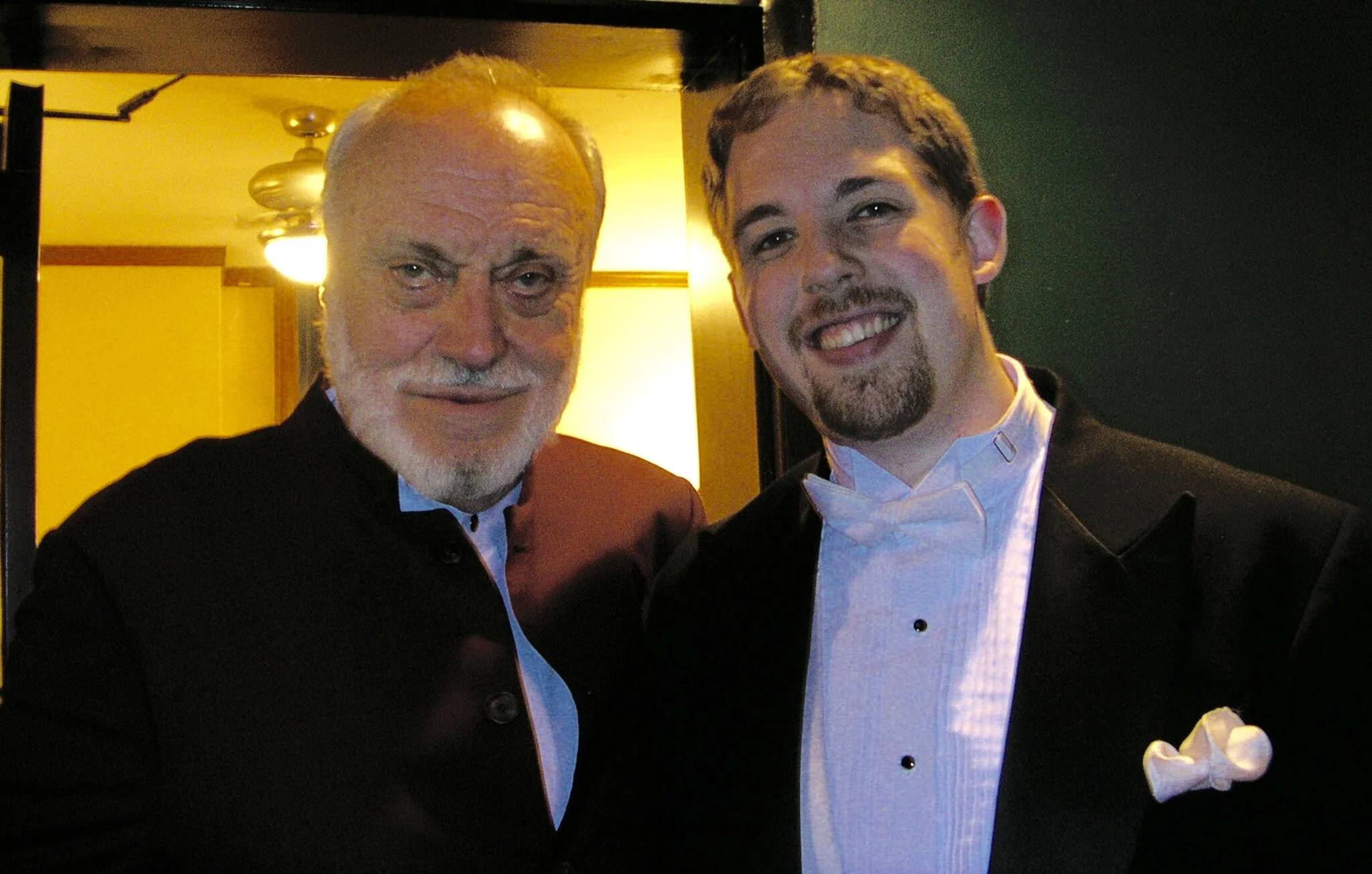
Audio: Brett Mitchell on Kurt Masur and the power of Beethoven
Kurt Masur and Brett Mitchell after performing together at the Manhattan School of Music on March 12, 2004.
DENVER — Brett Mitchell has shared a reminiscence about his mentor Kurt Masur with Colorado Public Radio as part of CPR Classical’s Beethoven At 250 series:

Brett Mitchell, Music Director of the Colorado Symphony, worked and studied with the late, great German conductor Kurt Masur from 2004 to 2009.
Mitchell remembers a story Masur told him about the power of Beethoven’s music.
“He was driving through New York City, when he was Music Director of the New York Philharmonic (1991-2002),” Mitchell said.
Masur was stopped at a red light and a man, who appeared to be homeless, knocked on his window.
“Masur rolled down the window and told the gentleman that he didn’t have any money,” Mitchell recounted from Masur. "'No, no no,'" the man said. 'Aren’t you the maestro?' Masur said that he was ... The gentleman said to Masur, 'I was in Central Park last summer for your performance of Beethoven’s 9th Symphony and I just wanted you to know that it changed my life and I have never been the same.'"
Mitchell said he has always remembered that story because it had a profound effect on him.
“I remember really feeling, maybe for the first time, how powerful music can truly be,” Mitchell said. “How broad a section of humanity that his music could really reach.”
Read Beethoven At 250: What’s Your Beethoven Story? at CPR Classical, and hear Mr. Mitchell’s full reminiscence below:

Video: Brett Mitchell and Basil Vendryes discuss race in classical music
Brett Mitchell and Basil Vendryes recorded their conversation on Wednesday in Golden, CO.
DENVER — Brett Mitchell sits down with Basil Vendryes, Principal Violist of the Colorado Symphony, for a candid, extended conversation about race in classical music. Watch the complete conversation below.

World premiere video: Brett Mitchell and the Colorado Symphony explore Wagner’s ‘Ring’
Brett Mitchell introduces the Colorado Symphony’s latest Virtual Music Hour: ‘The Ring without Words.’
DENVER — From May 22 to 24, as part of its ongoing Virtual Music Hour series, the Colorado Symphony will present never-before-seen video of its April 2018 performances of The Ring without Words, a selection of orchestral highlights from Richard Wagner’s Ring cycle as arranged by Lorin Maazel. Music Director Brett Mitchell explains how the project came to Denver:
“In my late twenties, I was very fortunate to be mentored by the great conductor Lorin Maazel. One of the many pieces we delved into during our time together was his arrangement of orchestral highlights from Richard Wagner’s Ring cycle, which Maazel affectionately titled The Ring without Words. When I accepted my position at the Colorado Symphony, I knew right away that I wanted to bring this incredible masterpiece to our audience, not just because of the greatness of Wagner’s music, but also because of my personal relationship with Maazel. When I reached out to Maestro’s widow to let her know we’d be doing this piece, I was stunned and incredibly moved when, a few weeks later, I received from her one of Maestro’s last batons with which to conduct the weekend’s performances. For so many reasons, it remains one of the most meaningful programs I’ve ever led, and one I’ll certainly carry with me for the rest of my life.”
Before presenting a complete performance of the piece, Mr. Mitchell and the orchestra shared with the audience various leitmotifs, compositional techniques, and plot points from Wagner's score:

Audio: A Little Help From My Friends: The Colorado Symphony Can Thank The Beatles For Its Conductor
Brett Mitchell at the piano in the CPR Classical Performance Studio.
DENVER — Colorado Public Radio Classical has produced an audio story featuring Brett Mitchell discussing some of his earliest experiences with classical music, exploring works by the Beatles, Antonio Vivaldi, Bernard Herrmann, Samuel Barber, and Felix Mendelssohn:
Do you remember the first time you heard classical music? Brett Mitchell, Music Director of the Colorado Symphony, thinks for him, it may have been the Beatles! Yes, the Beatles.
Classical music is an important part of movies, television, and concealed in the DNA of some of the modern popular music we know and love.
“There are all sorts of ways to get yourself into the world of classical music and it doesn’t necessarily have to be that you’re listening to Mozart from the time you’re in the womb,” said Mitchell. “I came to classical music quite late but what I didn’t know was that even in listening to this great pop music from the 60’s, I was getting a great dose of classical music.”
Listen as Brett Mitchell explains why the Beatles’ “Eleanor Rigby” has hints of Vivaldi. Paul McCartney’s then girlfriend can take some credit for that. Mitchell also teases out the classical influence on Bernard Herrmann’s score to Alfred Hitchcock’s “Psycho” and more.
To listen to the complete story, please click here.

Feature: 'Brett Mitchell on Sharing His Passion for New Music with Broad Audiences'
Photo by Jeff Nelson
Brett Mitchell is the featured guest in the latest issue of The Muse in Music, an online interview series about new music hosted by composer Daniel Perttu. Over the course of the interview, Mr. Mitchell discussed his passion for working with living composers, how he brings contemporary music to the Denver audience as Music Director of the Colorado Symphony, and how he serves as an advocate for new music.
On his passion for working with living composers:
I became a conductor of contemporary music because I was a composer before I was a conductor. Actually, my undergraduate degree is in composition, and I started conducting out of necessity because I was writing pieces for larger forces…. It was really my fellow student composers who said, “I've written a bigger piece; now maybe I'll have Brett conduct it,” so I really started by conducting contemporary music, brand-new, fresh world premieres. This was what I did at the beginning of my conducting career, and it wasn't really until I was twenty when I first conducted something that hadn't literally just come out of the printer. I guess I conducted other small things in high school, but it was the Mozart Oboe Concerto that was the first big piece that I ever conducted that wasn't by a living composer. I say all of that to point out that for me, the baseline where I started was conducting contemporary music. It didn't really have anything to do at that point with delving into the past and interpreting the works of these great masters. That certainly came in time, but that's not how I got started in my career….
The joy of bringing music to life for me is to do the composer's music justice. I am really there first and foremost, in my opinion, to serve one person, and that's the composer, and then certainly the orchestra, and then I serve the audience. But, it's really all about the composer because if the composer hadn’t written any of these notes, none of us would have anything to do with our lives. So that's really why I love it as much as I do, and, ultimately, why I do it.
On how he brings contemporary music to the Denver audience:
For me, presenting new music is all about the context in which one presents it. I mean context is key. So, I'll give you a perfect example of my very first subscription concerts, where I saw this back in September 2017. I knew that I wanted to do Beethoven Five on that program because that was the first full symphony that I ever conducted. And then I thought, how do I work some contemporary American music into this program, so that from the very outset I am setting this audience up to know when they come visit us in the concert hall what they're going to get. Yes, of course they will hear the greatest classical masterpieces, but they will also hear music that's being written by our friends and our neighbors, our compatriots, because I think that while those great classic pieces from centuries ago stick around for obvious reasons, and they have, in many ways, universal things to say, composers writing today are writing specifically for today’s audience. In that first contact point that I had with our subscription audience, I wanted to set that expectation up. So, I looked at Beethoven Five, and I thought, what are the two things that make Beethoven Five tick? And one of them, for me, is the journey from darkness into light, starting with the C minor and ending with that glorious celebratory C major. So I thought, what would be a kind of contemporary American corollary to that idea of trial. I'm very good friends with Kevin Puts, and have been, for -- God, it's almost twenty years now, which is terrifying. Kevin has a wonderful piece called Millennium Canons that I've done quite frequently. We opened our concert with this great celebratory fanfare, which is a perfect way to open a concert, and a perfect way, as far as I'm concerned, to start a music directorship. It also shows the audience, because of the kind of language that Kevin uses as he writes, that just because you may not know a name or two of these living composers, I promise, I'm never going to throw anything your way that's going to make you wish that you had stayed home with a glass of wine tonight.
So that was item one. Item two in the Beethoven that makes it tick is that kind of insistent rhythmic drive. Of course, that applies mostly to the first movement, but I was thinking of what contemporary American case might be a good corollary to that. The first thing I think of when I think of contemporary American music even more than John Adams is Mason Bates, because of the amount of electronica that he includes in his pieces. We did a piece that he wrote called The B-Sides for Orchestra and Electronica. We had Mason come out and play the electronica part. So, the audience had some interaction with him, and I came out and I played Millennium Canons with the orchestra and Kevin’s piece. I welcomed the audience and introduced Mason; Mason came out; and we chatted for two or three minutes on stage before we played the piece. So again, as I say, context is key, and I think putting the audience in as direct contact as possible with these composers, seeing that these are real people writing music today, it's not some abstract thing. It works best when you approach it from multiple angles: explaining to the audience that yes, we're playing contemporary music, explaining why are we playing contemporary music, and why did these pieces go together….
So, there has to be some kind of link, and you have to be willing and able to share that link with your audience, so I do an awful lot of speaking from the podium to our audience, and almost always it's to prepare them for the contemporary piece that we're about to hear. I try to give a little bit of context, a little bit of background, a little bit of history in the programmatic piece, what is it actually about. I find it's much more helpful for the audience to hear things like that before a contemporary piece, more than even, you know, an old programmatic work like the Symphonie fantastique or whatever. I mean, not that there's not plenty to talk about with Symphonie fantastique, but it's such a known quantity, I mean it’s now 190 years old.
But that's not the case with contemporary music. So, it's really about letting the audience in and making sure that you're programming intelligently, that you're finding those links, that if they were all to sidle up next to each other at a bar, they'd have something to talk about. And then sharing that with the audience. Honestly, I think that conductors aren’t always good at that. We tend to be good at programming, because that's what we do for a living; we come up with these great programs that have all these great links and intricate interrelationships. We go to all that trouble, but then many of us don't even bother to talk to the audience. We came up with this great idea and then we say, no, we're just going to play these three pieces and not tell them why you would play those pieces together. And I think that's more than half the battle right there.
On how he serves as an advocate for new music:
When you have the priorities that I have, which are: how do you show an audience that the music of Beethoven and the music of Bates are not so different, that it's all part of a continuum, those are the kinds of programs that I enjoy conducting the most. When I'm able to do contemporary music on programs, I always feel like those are the kind of healthiest and most intriguing programs that we do…. I suppose it would be easy to throw your hands up after a while, and it would certainly be easier on my time management if I didn't bother programming contemporary music all the time, and just kept programming Beethoven and Brahms symphonies and all, but I didn't get into conducting because I wanted to conduct Brahms symphonies, I got into conducting because I was conducting contemporary music. I didn't even think of it as contemporary music. I mean, it was just music.
To read the complete interview, please click here.

COVID-19 update: Colorado Symphony plays on
The Colorado Symphony has launched several initiatives to continue bringing music to its audience throughout the COVID-19 outbreak, including the newly announced Virtual Music Hour.
DENVER — Following the postponement of the Colorado Symphony’s concert activity through May 11, Brett Mitchell has filmed several messages to introduce its audience to new initiatives aimed at continuing to bring music to their audience throughout the COVID-19 outbreak.
The first video previews a series of solo and ensemble performances taped in Colorado Symphony musicians’ homes, shared via online video. “Just because we’re not together in Boettcher Concert Hall doesn’t mean the music has stopped.”
Watch the full message below:
On Thursday, April 2, Mr. Mitchell announced a second series, Virtual Music Hour, in which select large-scale works from previous seasons will be streamed each weekend on the Colorado Symphony’s website. He also announced the work to be streamed during the series’s first weekend (Apr. 3-5): Beethoven’s Symphony No. 7.
We begin this new series with one of the most uplifting, joyous pieces ever composed: Beethoven’s Seventh Symphony, the so-called “Apotheosis of the Dance.”
If anyone understood the struggle of self-distancing and isolation — something we’ve all learned a little more about over the past few weeks — it was Beethoven. When he was barely 30 years old, he wrote a heartbreaking letter to his brothers, saying that because of his ever-worsening hearing loss, "I was compelled early to isolate myself, to live in loneliness."
And yet, a decade later, even as his hearing continued to decline, and solitude became the rule rather than the exception, Beethoven showed us with this Seventh Symphony that no matter how dark things may seem, there is always hope, always the possibility of joy. And if there was hope for Beethoven, there is hope for all of us.
How grateful we can be to Beethoven for a reminder like that in times like these.
Watch the complete announcement below:
Feature: Brett Mitchell in Denver Life Magazine's 'On His Radar'

DENVER — Denver Life Magazine has featured Brett Mitchell in its March 2020 issue as the subject of a recurring arts feature called On His Radar, a segment in which prominent Denverites share what they’re reading, seeing, and listening to.

Courtesy Alive Coverage
Music
I did not grow up playing Mozart since I was a fetus. I grew up in Seattle in the ‘90s, with Nirvana, Pearl Jam, Soundgarden. When Billy Joel, one of my all-time favorites, was at Coors Field last summer, we splurged on fifth-row tickets. We also enjoy going to Dazzle for jazz. Because it’s what I do all day, very seldom do I ever listen to classical music for enjoyment.

Books
I just read The Book of Joy, by the Dalai Lama and Desmond Tutu, which was beautiful. I read a lot of leadership books and have found the best tend to be written by former coaches and players. My latest read was Bill Russell’s Russell Rules. I have coming up Eleven Rings by Phil Jackson and Bill Walsh’s The Score Takes Care of Itself.

Photo by Julieta Cervantes
Theater
I’m the oldest of three boys, and at Christmas the middle brother decided instead of getting presents he wanted to take us to do something. We went to Seattle’s Fifth Avenue theater and saw the out-of-town tryout of Mrs. Doubtfire. In June we’re going to see The Book of Mormon at the Ellie. And we went to Colorado Springs to see The Sound of Music with a friend of ours playing Captain Von Trapp.

TV/Movies
We don’t see too many movies in the theater. I’m a big Star Wars guy, so we did go see The Rise of Skywalker, not once but twice. We finished the new Star Wars TV series on Disney Plus, The Mandalorian, and finally watched Game of Thrones all the way through. We’re now on Stranger Things and the next two on the docket are Arrested Development and The Handmaid’s Tale.
Courtesy Princeton University Art Museum/Art Resource
Art
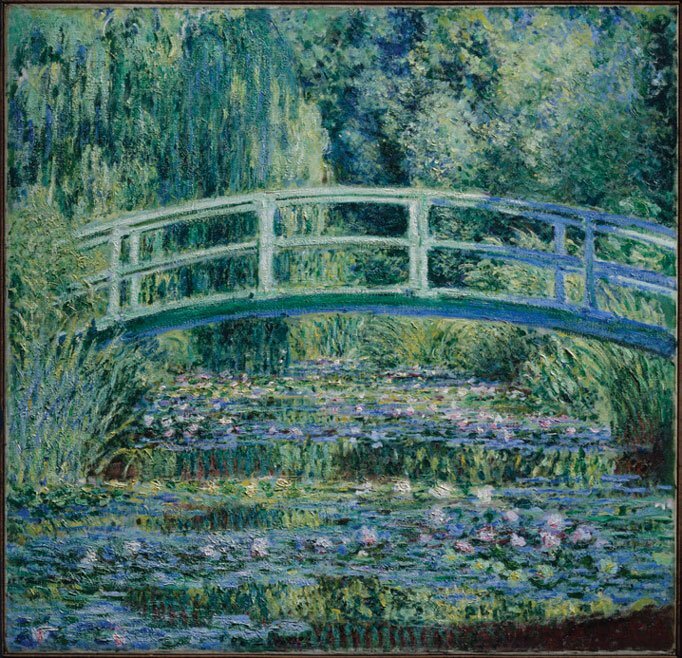
We saw the big Monet exhibit at the Denver Art Museum. I’m so glad it was a big success. Especially for those of us in the classical music world, we think of Monet as a visual impressionist, but we have impressionism in the music world: Debussy and Ravel are two musical impressionists. For someone spending his days with sonic impressionism, to spend some time with visual impressionism was so cool.

Colorado Symphony announces its 2020-21 season, Brett Mitchell's fourth as Music Director
DENVER — The Colorado Symphony has announced its 2020-21 season, which marks Brett Mitchell's fourth as Music Director. Over the course of the season, Mr. Mitchell will lead the orchestra in half a dozen subscription weeks and a number of other special projects.
Highlights of Mr. Mitchell's fourth season as Music Director of the Colorado Symphony include:
Sep 18-20: Korngold’s Sursum Corda, R. Strauss’s Suite from Der Rosenkavalier, and Beethoven’s Piano Concerto No. 5, “Emperor” (more info)
Oct 2-4: Kevin Puts’s …this noble company, Elgar’s Cello Concerto, and Shostakovich’s Symphony No. 5 (more info)
Nov 20-22: Hindemith’s Symphonic Metamorphosis, Rachmaninoff’s Rhapsody on a Theme of Paganini, and Tchaikovsky’s Symphony No. 2, “Little Russian” (more info)
Apr 9-11: Wagner’s “Good Friday Music” from Parsifal, Mason Bates’s Resurrexit, and Brahms’s A German Requiem (more info)
Apr 30-May 2: Ravel’s Noble and Sentimental Waltzes, Prokofiev’s Violin Concerto No. 2, and Stravinsky’s Petrushka (more info)
May 28-30: Mahler’s Symphony No. 2, “Resurrection” (more info)
Mr. Mitchell will collaborate with the following soloists during the Colorado Symphony's 2018-19 season:
Paul Huang plays Beethoven’s Violin Concerto
Olga Kern plays Beethoven’s Piano Concerto No. 5, “Emperor”
Joshua Roman plays Elgar’s Cello Concerto
Joyce Yang plays Rachmaninoff’s Rhapsody on a Theme of Paganini
Anna Christy and John Brancy sing Brahms’s A German Requiem
Stefan Jackiw plays Prokofiev’s Violin Concerto No. 2
Felicia Moore and Susan Platts sing Mahler’s Symphony No. 2, “Resurrection.”
Mr. Mitchell will lead several other special programs throughout the season, including:
Star Wars: The Force Awakens (complete film with John Williams's score performed live)
To learn more, please read these articles in Westword and The Denver Post, or visit the links below.
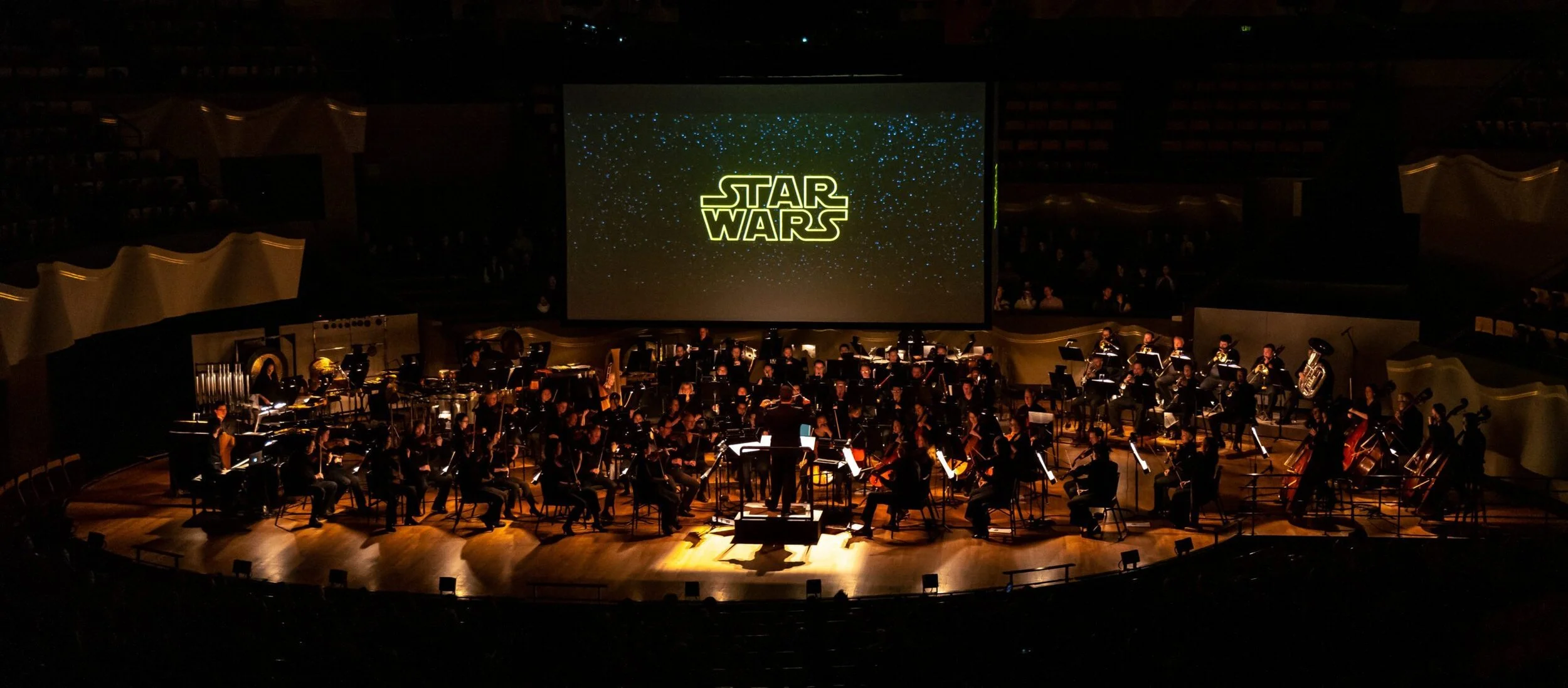
Review: "The Colorado Symphony takes Denver on intergalactic ‘Star Wars’ musical journey"
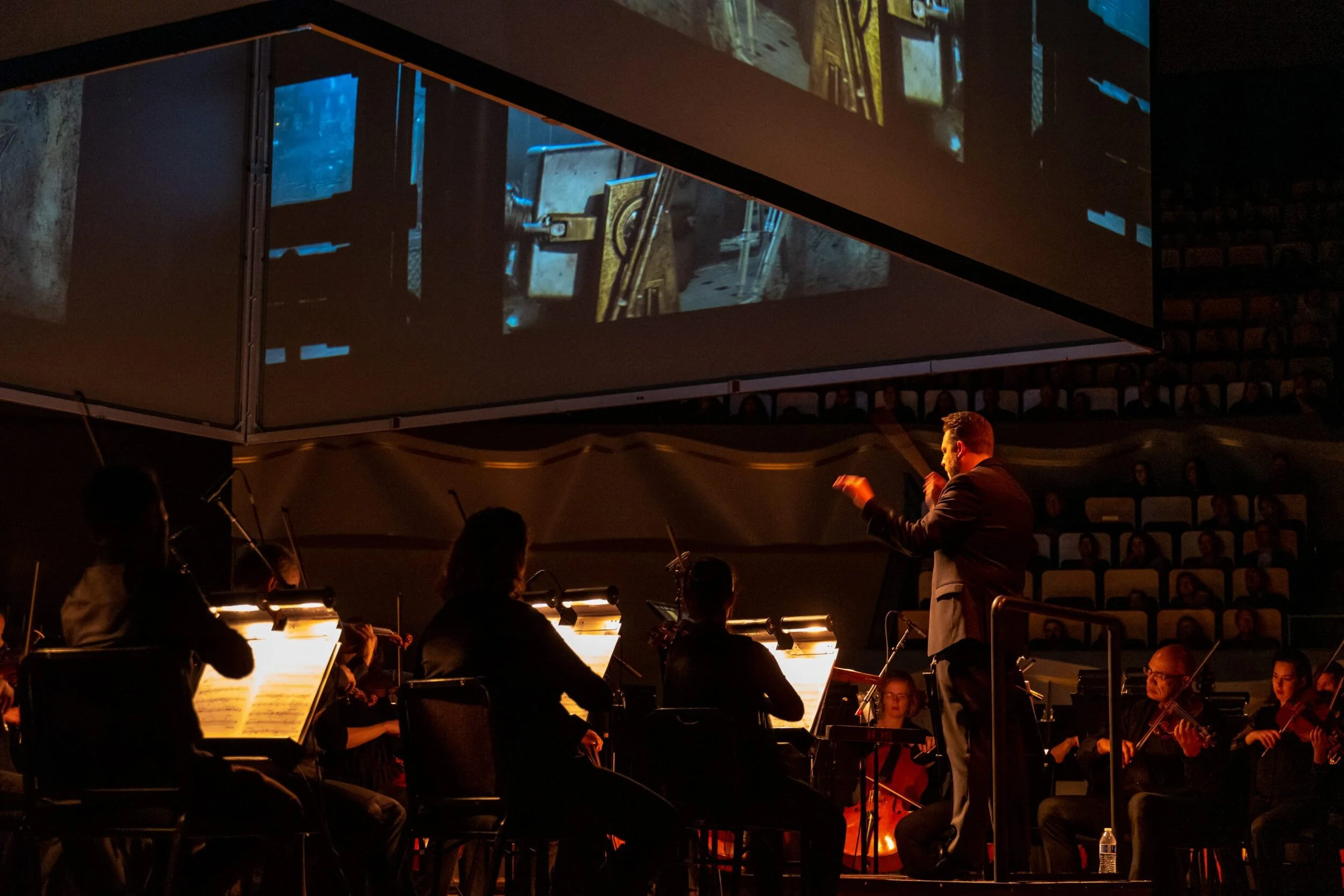
Brett Mitchell leads the Colorado Symphony in John Williams’s score for ‘Return of the Jedi’ at Boettcher Concert Hall in Denver on Friday, Feb. 28. (Photo by Colin McKinley)
DENVER — Live for Live Music has published a review of Brett Mitchell’s performance last night of John Williams’s score for Return of the Jedi with the Colorado Symphony:
The Colorado Symphony took Denver’s Boettcher Concert Hall through an intergalactic space journey on Friday night with a live performance of the 1983 sci-fi blockbuster, Star Wars: Return of the Jedi.
The performance saw a live, 360-degree play-through of the sixth episode of the Star Wars saga by the 80-symphonic piece. While John Williams was the original composer to the film’s iconic soundtrack, Friday night’s second-only performance of the Jedi battle was conducted by Brett Mitchell, who’s innovative, eclectic, and respectable leadership of the symphony glided music and film fans in attendance through the galaxy. As 7 p.m. came around, the theater lights dimmed as the percussion section led fans into the classic 20th Century Fox cinematic opening to begin the two-and-a-half hours of Luke Skywalker completing his destiny of defeating his father Darth Vader on the Death Star to bring balance to the galaxy.
Solo, Chewbacca, R2-D2, and C-3PO landed on the forest moon of Endor to meet a tribe of always-lovable Ewoks. The opening “second set” banter gave way to Mitchell’s storytelling of the symphony’s remarkable musicianship applied to learn the film’s score in just four days in stating, “We’re gonna blow up the second Death Star, and may the Force be with you.”
The symphony rose to a climactic musical force as Skywalker battled Darth Vader while the Rebel fleet successfully destroyed the Death Star, allowing the Empire to fall back into balance. The six-minute ending credits were completed with a grand musical peak to send fans off into the night’s symphonic galactic journey, while also making for a wonderful reminder that The Force is always with us.
After a kickoff on Thursday and a second performance last night, the Colorado Symphony completes its symphonic Jedi training with a final matinee performance on Saturday at 2 p.m.
To read the complete review, please click here.
Scroll down for a full gallery from Friday’s performance, courtesy of photographer Colin McKinley.




Video: Brett Mitchell discusses John Williams’s score for ‘Return of the Jedi’
Brett Mitchell and host Karla Walker in the Colorado Public Radio studios. (Photo by Hart Van Denburg/CPR)
DENVER — Before leading the Colorado Symphony in Star Wars: Return of the Jedi later this week (Feb. 27-29, more info here), Brett Mitchell sat down with host Karla Walker in the Colorado Public Radio Performance Studio to explore some of the highlights of John Williams's iconic soundtrack.
After reviewing themes from A New Hope (original breakdown here) and The Empire Strikes Back (original breakdown here), Mr. Mitchell explores the new themes Mr. Williams created for characters in Return of the Jedi, including Luke and Leia, the Emperor, Jabba the Hutt, and the Ewoks.
Watch the full video and listen to the audio version below, or read the complete story on CPR.org: WATCH: The Iconic Musical Themes Of ‘Return Of The Jedi,’ Explained.

Preview: Brett Mitchell leads Beethoven 9 at Red Rocks
DENVER — CPR Classical has published a preview of classical music events around Colorado during summer 2020, including Brett Mitchell’s performance of Beethoven’s Ninth Symphony with the Colorado Symphony and Chorus at Red Rocks, which the station dubs “the classical event of the summer.”
Some of the world’s best classical musicians come to Colorado each summer to perform at music festivals across the state. Free, family-friendly, and ticketed events abound, so get out your calendar and start dreaming about all the inspiring music coming to Colorado in 2020.
July 26, 2020 - Okay, this is not part of a festival, but the music and venue make this the classical event of the summer. The Colorado Symphony celebrates Beethoven's 250th birth anniversary with perhaps the largest force of musicians yet to perform at Red Rocks Amphitheatre, complete with full orchestra, a chorus of over a hundred voices plus soloists under Music Director Brett Mitchell. The spectacle is sure to be an awesome match for the beautiful view of Denver under a first quarter moon, should Beethoven's gloriously thunderous majesty not provoke the heavens during the course of the night.
To read the complete preview, please click here.

Preview: Brett Mitchell on the podium for New Year's Eve with the Colorado Symphony
DENVER — The Gazette (Colorado Springs) has published a preview of various New Year’s Eve celebrations in and around the Denver metropolitan area, highlighting Brett Mitchell’s fourth New Year’s Eve program with the Colorado Symphony. Complete details are as follows:
“A Night in Vienna” by Colorado Symphony
When: 6:30 p.m. Tuesday
Where: Boettcher Concert Hall, Denver Performing Arts Complex, 1400 Curtis St., Denver
Price: $20 to $94; 877-292-7979, coloradosymphony.org
The early concert means you can take in some classical music and still close 2019 out on the town. The Colorado Symphony will present a program of waltzes and marches. Music Director Brett Mitchell will conduct.
On the program, Mr. Mitchell will lead works by Johann Strauss II, Richard Strauss, Mahler, and Tchaikovsky. For more information, please click here.

Colorado Public Radio presents ‘Holiday Memories with Brett Mitchell’
2-year-old Brett Mitchell with his grandfather, Bill Benson, on Christmas 1981. (Photo by Lori Mitchell)

8-year-old Brett Mitchell on Christmas 1987. (Photo by Roy Mitchell)
DENVER — Colorado Public Radio has just announced a two-hour holiday special featuring Brett Mitchell discussing his favorite music and memories of the season with host Monika Vischer. Holiday Memories with Brett Mitchell will air five times on CPR Classical throughout the month of December (all times Mountain):
Mon, Dec 2 at 2 p.m.
Sun, Dec 8 at 12 p.m.
Wed, Dec 18 at 10 a.m.
Sat, Dec 21 at 9 a.m.
Wed, Dec 25 at 3 p.m.
Audio: 'From Björk to Black Holes: Kevin Puts and Brett Mitchell on Classical Composition in the 21st Century'
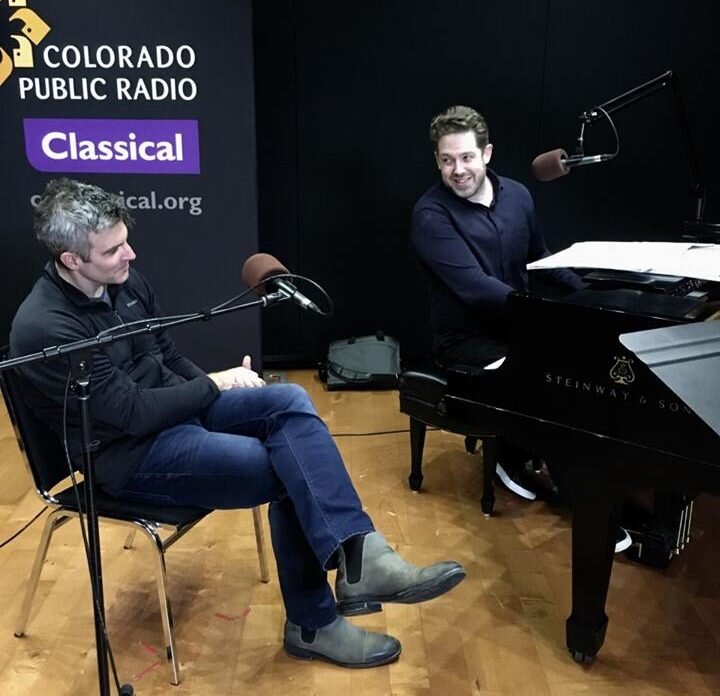
Composer Kevin Puts and conductor Brett Mitchell in the Colorado Public Radio Performance Studio (Photo by Nick Dobreff)
DENVER — From Colorado Public Radio:
CPR’s Monika Vischer welcomed two old friends to the CPR Performance Studio: Pulitzer Prize-winning composer Kevin Puts and Colorado Symphony Music Director Brett Mitchell. Taking turns at the piano, they investigated the mystical process of composing: turning inspiration into music.
Puts won the Pulitzer Prize in Music for his 2011 opera, Silent Night, about the famous "Christmas Truce" of 1914. He talked about his influences, from Beethoven to Björk. He then demonstrated on the spot on our 9-foot Steinway how he’d go about writing a brand new work.
Mitchell and the Colorado Symphony present the Colorado premiere of Puts' piece, The Brightness of Light, with soprano Renée Fleming and baritone Rod Gilfry on November 15th and 17th. The inspiration behind this piece: intimate letters between artist Georgia O’Keeffe and her husband Alfred Stieglitz.
To hear this story, please click here.

Conductor Brett Mitchell and composer Kevin Puts (Photo by Monika Vischer)